Roger-Luc Chayer (Image : AI / Gay Globe)
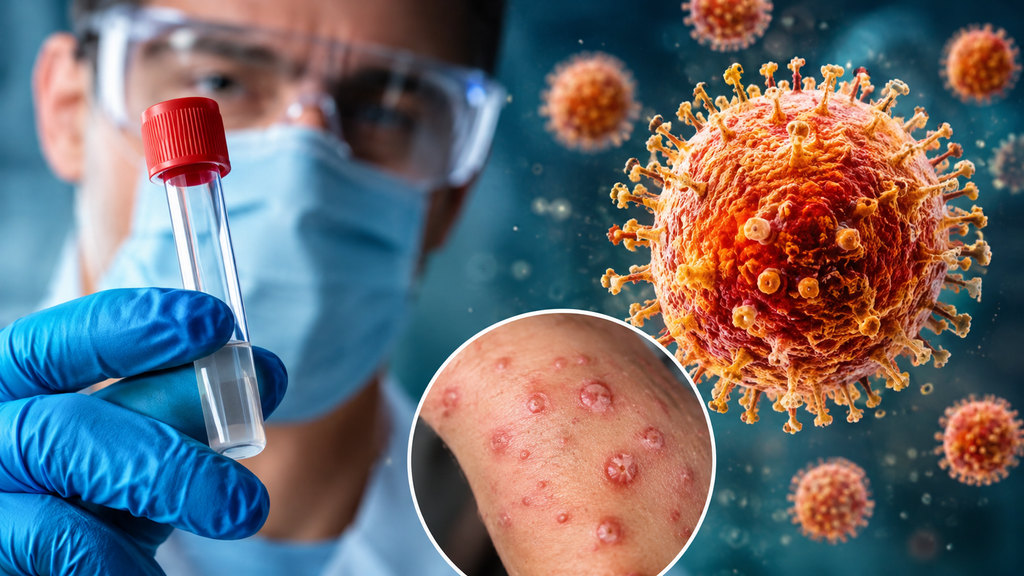
It was once thought to be well under control, if not virtually absent from our major cities. Unfortunately, monkeypox (Mpox) is making a comeback in several major cities across North America and Europe.
In May 2022, a major monkeypox (Mpox) outbreak began attracting the attention of international health authorities, as cases were reported in several countries where the disease had previously been uncommon. On July 23, 2022, the World Health Organization (WHO) declared a Public Health Emergency of International Concern (PHEIC) in response to the rapid spread of the virus, particularly within sexual contact networks among men who have sex with men. This alert led to intensified vaccination campaigns, testing and prevention measures. The international emergency was eventually declared over on May 11, 2023, following a significant decline in cases worldwide.
Now, public health authorities in several countries are reporting a substantial resurgence in infections, a development that is once again raising concerns about the spread of the virus. Mpox is characterized by skin rashes that can take the form of bumps, blisters or sometimes painful lesions, often accompanied by fever, headaches, muscle aches, fatigue and swollen lymph nodes. Lesions can appear on different parts of the body, including the genitals, anal area, face and mouth. Transmission occurs primarily through close contact with lesions, bodily fluids or contaminated objects, particularly during intimate or sexual contact.
Although most people infected with Mpox recover without serious complications, the infection should not be taken lightly. In certain circumstances, it can lead to severe complications, including secondary bacterial infections, eye damage that may result in vision loss, pneumonia, systemic infections and, in the most serious cases, death. The risk of mortality is particularly high among immunocompromised individuals, especially those living with advanced HIV infection whose immune systems are severely weakened, as well as young children and people with certain medical vulnerabilities. Mortality rates vary depending on the viral strain, the health of infected individuals and their access to medical care. This is why early diagnosis and appropriate medical treatment remain essential.
There is currently no antiviral treatment specifically approved and proven consistently effective against Mpox. Management primarily focuses on relieving symptoms, controlling pain, maintaining hydration and treating any complications that may arise. In severe cases or among particularly vulnerable patients, physicians may consider using tecovirimat (TPOXX), an antiviral medication originally developed to treat smallpox. However, clinical studies have not yet conclusively demonstrated its effectiveness against Mpox in all populations. Specialized medical care may also be required when patients develop extensive lesions, secondary infections or organ complications. Vaccination remains an essential prevention tool, particularly for people at increased risk of infection.
In North America, particularly in Canada, the Imvamune vaccine is available free of charge to individuals considered at increased risk of exposure. This generally includes certain men who have sex with men, people with multiple sexual partners, some sex workers and individuals who have been in contact with a confirmed case. In the United States, the JYNNEOS vaccine is generally covered by insurance for eligible individuals, while free access for uninsured people depends on local public health programs. In Europe, several countries also offer free vaccination to targeted groups, including France, where both the vaccine and its administration are free for people who meet the established eligibility criteria. However, there is no uniform European policy: access requirements and coverage vary from one country to another. People are therefore encouraged to contact their local health authorities to confirm their eligibility and find out where vaccination is available.
ADVERTISING
Read Also
Hepatitis A and Hepatitis B Vaccination in Gay Men: From the 1990s Public Health Campaigns to Bepirovirsen Innovation
https://gayglobe.net/en/hepatitis-a-b-vaccination-gay-men-1990s-bepirovirsen/
What If Immunotherapy Could Change the Future of HIV Treatment?
https://gayglobe.net/en/immunotherapy-for-hiv-new-treatment-path/
Why Is There a Vaccine for COVID but Not for HIV if They Are Both Viruses?
https://gayglobe.net/why-is-there-a-vaccine-for-covid-but-not-for-hiv-if-they-are-both-viruses/
HIV: New Statistics Reveal a Reality That Few People Are Aware Of
https://gayglobe.net/en/rising-hiv-cases/
HIV: Messenger RNA Brings New Hope to Richard, Who Has Been Living with HIV for 23 Years
https://gayglobe.net/vih-richard-espoir-guerison/
HIV: Two Injections a Year, a New Freedom for Patients
https://gayglobe.net/en/hiv-two-injections-a-year-a-new-freedom-for-patients/