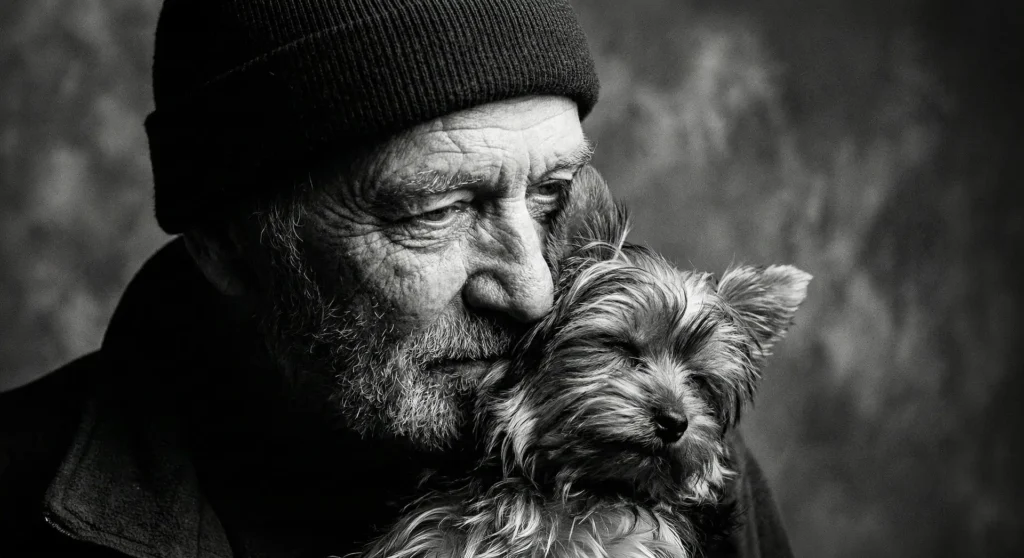
Roger-Luc Chayer with Arnaud Pontin & Carle Jasmin (Image : Pixabay)
Gay Globe – HIV, LGBT Memory and the Fight for Equality
An Essential Memory to Preserve
Gay Globe has decided to offer you a major special report that will most likely no longer be possible to publish in 10 or 15 years. Through these testimonies, elders from the LGBT communities who have survived HIV — whether they themselves faced the disease or survived the loss of loved ones — seek to pass on their memory and lived experience to today’s 15- to 30-year-olds, before this generation finally leaves the stage.
Roger-Luc Chayer’s Personal Experience with HIV and AIDS
But a meaningful starting point for this subject remains the personal experience of Gay Globe editor Roger-Luc Chayer. Between the pain of losing people he loved and the responsibility he imposed on himself as the editor of an LGBT media outlet to constantly follow developments related to HIV and AIDS, his goal has always been to keep readers better informed.
“I experienced the reality of AIDS firsthand, not as a person living with the virus, but through the loss of someone very dear to my heart: my friend Pascal Corte, from Marseille, who died in 1995 in his early twenties. His mother, author Caroline Gréco, wrote a beautiful book recounting his struggle with the disease and the final moments of his life. Gay Globe publishes it freely and without charge so that this memory remains accessible to as many people as possible.”
📎 The book is available here: https://gayglobe.net/lecture-a-dieu-julien/
Pascal, Hidden Identity and the Tragedy of HIV
“Pascal, whose identity had been concealed at the time by his mother, who called him Julien in her book, never wanted me to know that he was living with HIV and progressing toward AIDS. Shortly before his death, he was supposed to come join me in Montreal, but it was upon receiving a letter from his mother announcing his passing that I learned of his tragic fate.
A long series of correspondences followed, first by postal mail, then by email, and often by telephone. Caroline Gréco, whose real name is Pia Schaufelberger, helped me understand everything Pascal had experienced. From these exchanges, a deep and sincere friendship was born.”
Magazine RG of Montreal and the Early Years of the HIV Crisis
This was not Roger-Luc Chayer’s first encounter with the HIV virus. Starting in May 1993, he contributed to Magazine RG of Montreal, a publication aimed at gay men and the LGBT community. At that time, many contributors, readers, and close collaborators of the magazine were living with HIV, when no truly effective treatment for AIDS yet existed.
There were also readers affected by the disease, often in terminal stages, who sought comfort from gay journalists so they would not die alone in a hospital room. Roger-Luc frequently agreed to visit them and accompany them through their final moments.
“At that time, before the arrival of triple therapy in the mid-1990s, people living with HIV/AIDS were very often rejected by their families, employers, and sometimes even their friends. They were left completely isolated, ill, and without resources. I felt a responsibility toward readers and, although this reality deeply affected me at first, I now realize that providing dignified support to people who lacked everything — from food to medication — helped shape the man I have become.
When you have witnessed so much suffering, courage, and loneliness, you never look at others the same way again,” says Roger-Luc, thoughtfully.
Richard, 80 Years Old – Surviving HIV Thanks to Triple Therapy
Richard was already in his fifties when he received his HIV diagnosis in the early 1990s. A professional librarian, quiet and deeply passionate about literature, he lived a peaceful life surrounded by books and the LGBT community.
At that time, an HIV/AIDS diagnosis often felt like a death sentence. Treatments were limited, side effects were severe, and future prospects were extremely bleak. Richard saw friends, colleagues, and many men he had known in the gay community pass away. Every late-night phone call could announce another death.
“We no longer made long-term plans,” he recalls. “We lived a few months at a time. Buying a book we planned to read in two years sometimes felt pointless.”
The burden of secrecy was immense. Like many people living with HIV, Richard feared rejection. Few people knew his health status. He continued working at the library, welcoming visitors and recommending books with his usual smile, while carrying the anxiety of AIDS alone.
Then came triple therapy in the mid-1990s.
For Richard, it felt like witnessing a medical miracle in real time. Within months, his health stabilized. Opportunistic infections decreased. Hospitalizations became less frequent. For the first time in years, doctors began speaking about the future rather than survival.
“I had spent so long preparing to die that I had to learn how to live again,” he says with a laugh.
Gradually, his world changed. He began making plans again, traveling, buying a home. Every birthday became a silent victory over HIV/AIDS.
Now 80 years old, Richard looks with emotion at younger LGBT generations living in a completely different reality. Modern treatments now allow people to live long lives with HIV, but he believes the memory of those who did not survive must never disappear.
“Medication saved my body, but the memory of those who are gone stays with me every day.”
Police Raids Against LGBT Communities in the 1970s
For many gay men in the 1970s, going to a gay bar or sauna carried a constant risk: a police raid.
Even after homosexuality was decriminalized in 1969, social prejudice remained strong. LGBT venues were regularly targeted by law enforcement.
The consequences were severe: arrests, public humiliation, job loss, and family rejection.
These raids left a deep mark on LGBT rights history, while also helping to shape early activism and human rights movements.
Decriminalization of Homosexuality in Canada
For much of Canadian history, same-sex relations between men were considered criminal.
In 1967, Pierre Elliott Trudeau stated that “the state has no place in the bedrooms of the nation.”
In 1969, Bill C-150 decriminalized consensual same-sex relations between adults.
However, discrimination against the LGBT community persisted long after this historic reform.
The AIDS Years of Fear (1980s–1990s)
The 1980s and 1990s were marked by a global HIV/AIDS crisis.
The disease was initially almost always fatal and heavily stigmatized. Those affected often lived in fear, isolation, and rejection.
Activist movements such as ACT UP played a crucial role in fighting for rights and access to treatment.
The arrival of triple therapy in 1996 radically transformed the situation, turning HIV from a fatal disease into a manageable chronic condition.
The Fight for Marriage Equality and LGBT Rights
The fight for same-sex marriage is part of a long struggle for LGBT rights and equality.
In the 1990s and 2000s, legal challenges multiplied, based on constitutional rights and equality principles.
In 2005, Canada legalized same-sex marriage, becoming a global pioneer in LGBT rights.
These advances significantly transformed social recognition of same-sex couples, even though inequalities remain.
PrEP and New LGBTQ+ Rights
In the 2010s, HIV prevention entered a new era with PrEP, a highly effective preventive treatment.
The principle of U=U (Undetectable = Untransmittable) also changed global perceptions of the virus.
At the same time, LGBTQ+ rights continued to advance: legal protections, recognition of transgender identities, and broader civil rights.
Despite this progress, stigma and inequality remain present in society.