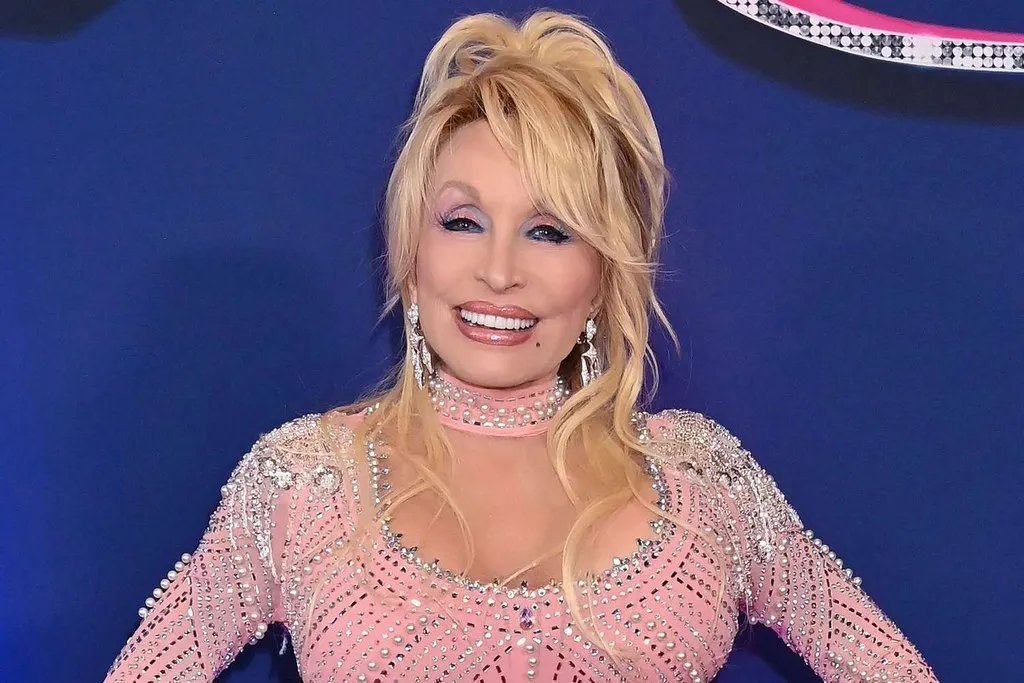
Groupe Gay Globe Media (Photo : Tammie/AFF-USA/Shutterstock)
Quite unexpectedly, the queen of country music and longtime ally of the LGBTQ+ communities has just passed away suddenly at the age of 80. Her career is one of the most spectacular in the global entertainment industry, and we offer you an analysis of her career as well as her exceptional contribution, on several levels, to our communities.
Dolly Parton made a significant contribution to the LGBT communities, even though she never engaged in political activism in the traditional sense. Her influence is based primarily on a rather rare combination of visibility, acceptance, concrete support and protection of her LGBT admirers, in a field—the American country music scene—that has long been marked by religious conservatism.
One of the most significant elements is her public support for LGBT rights and same-sex marriage. Parton has regularly stated that everyone should be able to be themselves and love whomever they want. She explained, in particular, that her gay and lesbian admirers identified with her own journey because she herself had had to “fight for the right to be herself.”
Her amusement park, Dollywood, has become particularly popular among LGBT visitors. Parton notably accepted and continued the “Gay Day” celebrations at the park, despite threats and pressure from religious and conservative groups. She said in this regard that she did not need to justify herself and that she simply loved everyone.
This is quite significant historically: Dollywood is located in Pigeon Forge, in the heart of eastern Tennessee, in a traditionally very conservative region. The fact that a locally popular figure like Parton openly embraced this acceptance therefore had particular cultural significance.
Parton also developed a very special relationship with drag culture. She once recounted taking part in a Dolly Parton look-alike contest organized by drag queens… and losing! She humorously said that she had become a sort of “patron saint” of drag queens.
Her aesthetic—spectacular hairstyles, makeup, exaggerated femininity, humor, self-deprecation and self-transformation—has obviously resonated tremendously within queer culture.
She also spoke out against homophobia
Following the Pulse nightclub massacre in Orlando in 2016, Parton unequivocally condemned the attack and homophobia, stating that no one should be killed because they are different or because their identity or choices are not understood or accepted. She also defended the idea that transgender people should be able to live safely and feel comfortable in their surroundings.
Her message was all the more remarkable because she came from a world deeply associated with evangelical Christianity and the conservative American South.
Her support for the fight against HIV/AIDS
It is also important to mention her broader philanthropic commitment to the fight against HIV/AIDS. Parton’s contributions to HIV/AIDS-related causes are part of her humanitarian work, alongside her numerous efforts in the areas of education, poverty, natural disasters and medical research.
In my opinion, the most interesting aspect for the Gay Globe family is that Dolly Parton was not simply a celebrity appreciated by gay people: she became a figure of cultural safety for several generations of LGBT people. She was essentially telling them: you can be different, you can be yourselves, and you still deserve to be loved.
And she did so without adopting a moralizing or activist tone. In 2016, she also explained that members of the LGBT community were particularly drawn to her because she herself had always defended the right to be different.
This is probably where her greatest contribution lies: she used her immense cultural capital to normalize the acceptance of LGBT people in environments where such acceptance was far from guaranteed.
The announcement of her death today, made in a video by her nephew, makes me think of the death of Gay Globe publisher Roger-Luc Chayer’s friend and accomplice, journalist André Arthur, who had himself prepared and arranged for the publication on Twitter of the message announcing his own death a few years ago: “Today, May 8, 2022, at Laval Hospital, I died. I leave behind my son René (Jade), my 3 wonderful grandchildren, my daughter Pascale (Louis), my dear Lucy and my brother Louis (Réjane).”
ADVERTISING
READ ALSO
- Drag Queens: How an Artistic Expression Became a Controversial and Unavoidable Global Cultural Phenomenon
- La Mie Matinale: More Than a Bakery, an Institution in Montreal’s Gay Village
- Gay Globe 11,900 Articles Published: 30 Years of LGBTQ+ Media History
- Gay Globe Magazine No. 168 – LGBTQ+ News, Culture and Society – Sting Special
- Gay Globe #170: LGBTQ+ Pride – We Have Every Reason to Be Proud!
- Invitation to Journalists, Authors, Writers, and the General Public to Submit Their Texts to Gay Globe Media