Roger-Luc Chayer (Image : AI / Gay Globe)
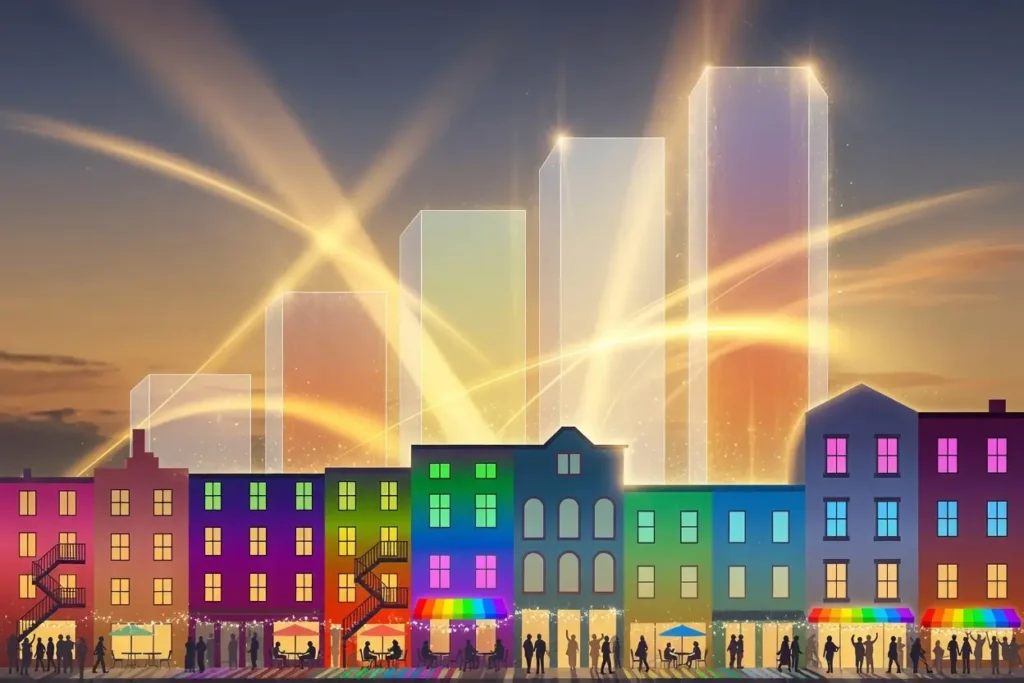
The social challenges facing Montreal’s Gay Village and the closure of some businesses are often widely discussed. However, it is frequently overlooked that behind the storefronts are powerful financial, commercial, and economic players generating substantial economic activity for the Village, even if their presence is not always visible.
When discussing the organizations and stakeholders that concretely support the economy of Montreal’s Gay Village in 2026, they can be divided into several categories. However, their influence is far from equal.
The first and most significant player is undoubtedly the Village Business Development Corporation (SDC du Village). It represents approximately 255 businesses and is currently the leading economic development organization in the area. Its role includes promoting businesses, organizing marketing campaigns, negotiating with various levels of government, funding neighborhood activities, and defending the economic interests of its members. The SDC is also at the center of revitalization projects and the expansion of its territory.
Governments are also major financial partners. The City of Montreal funds part of the urban improvements, pedestrianization projects, security measures, street furniture, and revitalization initiatives. The Government of Quebec contributes funding to several economic and community projects, while the Government of Canada is also investing, notably in the future Espace + Village community complex, a project valued at nearly $12 million announced in July 2026.
Montreal’s Gay Village is now far more diverse than it was twenty years ago. The LGBTQ+ community remains an important part of its identity, but it no longer represents the majority of customers for several businesses.
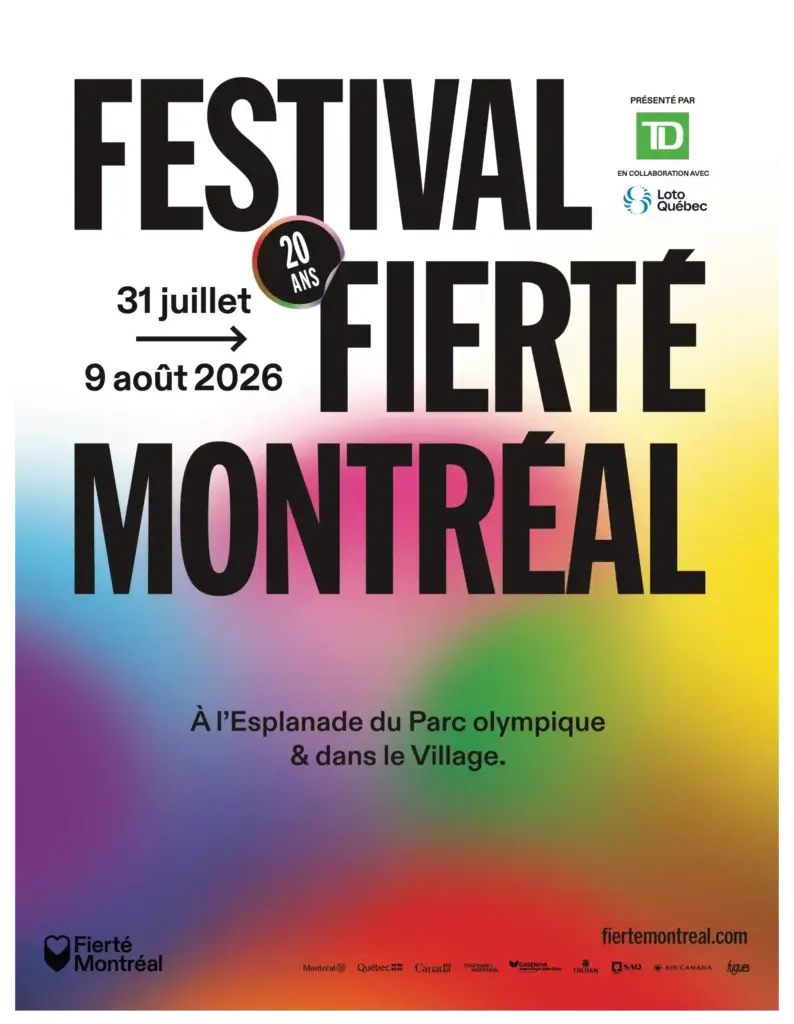
Another often underestimated player is Fierté Montréal. Although the organization is not a commercial entity, its festival generates significant economic benefits every year for hotels, restaurants, bars, and Village businesses through the arrival of hundreds of thousands of visitors.
The 2024 edition welcomed approximately 850,000 to 900,000 participants, according to reports from the organization and its partners. It generated strong hotel occupancy rates in downtown Montreal, a significant increase in traffic for restaurants, bars, and Village businesses, as well as major spending in accommodation, transportation, and entertainment.
Despite attendance exceeding 900,000 people, Fierté Montréal has not released an official study establishing the economic impact of its 2024 and 2025 editions. Compared with other major Montreal festivals, several observers nevertheless estimate that the event’s economic impact could reach several tens of millions of dollars.
Among the Village’s leading businesses and commercial establishments, many generate significant revenues and contribute substantially to job creation and the neighborhood’s economic vitality.
Major Businesses and Commercial Establishments
• Priape (specialty retail store)
• Boutique Évolution (men’s fashion)
• L’Euguélionne (feminist and queer cooperative bookstore)
• Complexe Sky / Sky Pub & Club
• Club Unity
• Le Cocktail
• Le Stud
• Le Date
• Cabaret Mado
• Saloon Bistro Bar
• Renard Bar
• District Vidéo Lounge
• Le Sky
• Le District
• Le Weiser
• La Mie Matinale
• Gourmet Frutti
These establishments generate a significant portion of the Village’s tourism and commercial activity.
Beyond businesses and commercial enterprises, Montreal’s Gay Village is also home to numerous community, cultural, and advocacy organizations that actively contribute to its social, economic, and cultural vitality.
Major Community Organizations
• RÉZO
• Jeunesse Lambda
• L’Astérisk
• Espace + Village
• Montreal LGBTQ+ Community Center
• Conseil québécois LGBT
• Fierté Montréal
• Fondation Émergence
• Maison Plein Cœur
• Séro-Zéro
• Maison de l’Amitié
• Coalition des familles LGBT+
• ACCM
• Aide aux Trans du Québec
• Arc-en-ciel d’Afrique
• AGIR Montréal
The Village’s economic presence is also supported by major investors and real estate owners, whose development projects help attract new customers and stimulate the neighborhood’s economic activity. Among the most influential players are Prével, Interloge, MSC Investissements Canada, Espace + Village, as well as numerous holding companies, trusts, and numbered corporations that own a significant portion of the commercial properties along Sainte-Catherine Street East.
The Economic Power of the Village Goes Beyond Its Historic Role
For decades, Montreal’s Gay Village has been defined through its history, its struggles, and its contribution to the advancement of LGBTQ+ communities. This reality remains essential. However, it no longer fully explains the forces shaping its future. Behind the storefronts, real estate projects, and revitalization efforts lies another, much quieter battle: the battle over economic power.
Buildings worth millions of dollars, hundreds of businesses, influential organizations, significant public investments, developers, property owners, financial institutions, and thousands of visitors who spend money there every year make Montreal’s Gay Village a true economic engine at the heart of the city.
In this context, one question emerges: who is truly shaping the Village of tomorrow? Elected officials? Business owners? Community organizations? Or the property owners and investors who are gradually controlling a growing share of its real estate assets?
One thing is now undeniable: Montreal’s Gay Village is no longer only a symbol. It has become a territory where economic, political, social, and real estate interests of strategic importance converge. Those who invest in it, develop projects there, and own its buildings are not merely shaping the future of a neighborhood; they are influencing the evolution of one of Montreal’s key urban districts.
At a time when the future of the Village is the subject of passionate debate, one certainty remains: understanding who controls the economic power of the Village means understanding who will write the next chapter of its history. Because behind every storefront, every building, and every investment lies a reality that can no longer be ignored: Montreal’s Gay Village has become one of the city’s most strategic economic laboratories.
ADVERTISING
READ ALSO
These Gay Billionaires Redefining Global Economic Power
https://gayglobe.net/en/gay-billionaires-peter-thiel-david-geffen-jon-stryker-power/
La Mie Matinale: More Than a Bakery, an Institution in Montreal’s Gay Village
https://gayglobe.net/en/la-mie-matinale-montreal-gay-village-bakery/
Is the Gay Porn Industry Really in Crisis? An Investigation into a Transforming Market
https://gayglobe.net/is-the-gay-porn-industry-really-in-crisis-an-investigation-into-a-transforming-market/
MBM and Maheu United: The New Quebec Pest Management Giant Led by Hélène Bouchard
https://gayglobe.net/mbm-and-maheu-united-the-new-quebec-pest-management-giant-led-by-helene-bouchard/
Montreal’s Gay Village: Soraya Martinez Ferrada Takes Action to Support Local Businesses
https://gayglobe.net/en/montreals-gay-village-soraya-martinez-ferrada/