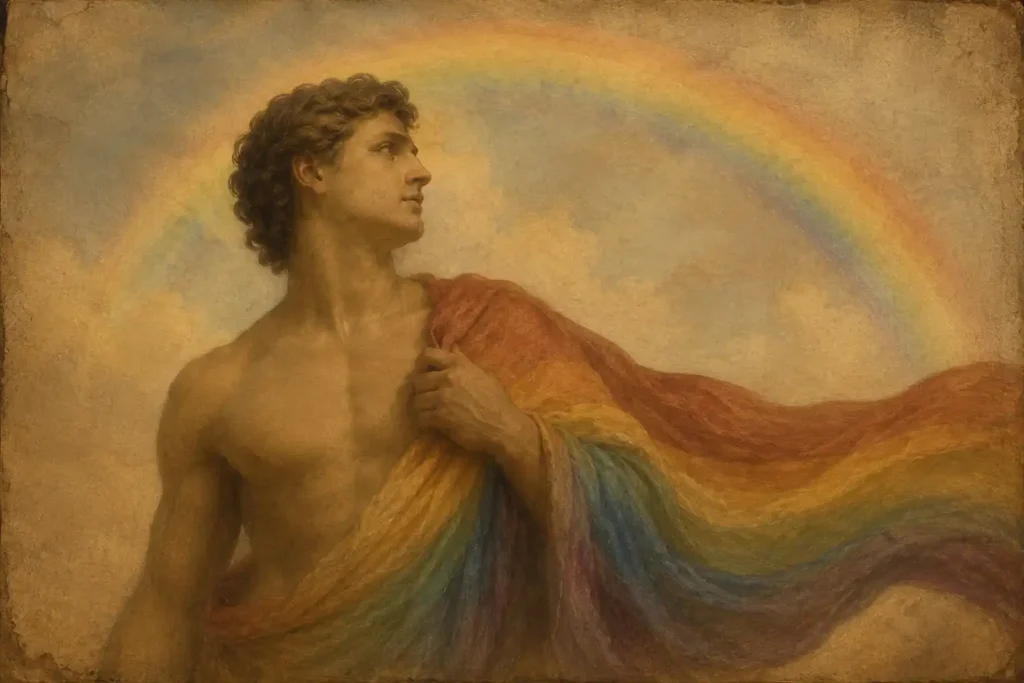
A special feature by Carle Jasmin (Image: AI / Gay Globe)
For many years, Gay Globe Magazine has published a regular column dedicated to LGBTQ+ personalities from the past who helped change the world. However, these portraits represent only a very small fraction of all the people who, often working in the shadows, shaped history and contributed to making our society what it is today. This special feature is entirely dedicated to them.
Since antiquity, women and men who loved people of the same sex or who challenged traditional gender expectations have contributed to the development of human civilization. Yet for centuries, their sexual orientation or gender identity was often hidden, ignored, or deliberately removed from official historical narratives.
This reality does not diminish the importance of their achievements. On the contrary, it reminds us that LGBTQ+ people have always participated in major scientific discoveries, artistic revolutions, political transformations, and philosophical movements that have shaped the world.
However, this history must be approached with care and historical accuracy. Modern concepts such as “gay,” “lesbian,” “bisexual,” or “transgender” did not exist in most ancient societies. When historians examine the private lives of historical figures, they rely on letters, autobiographies, contemporary accounts, or academic research. In some cases, the evidence is firmly established. In others, interpretations remain debated. This feature clearly distinguishes between these situations in order to present a history consistent with current knowledge.
Here are fifty personalities whose influence on science, politics, the arts, literature, philosophy, and human rights extends far beyond their sexual orientation or gender identity, but whose lives remind us that LGBTQ+ people have always been an integral part of human history.
1. Sappho (c. 630 – c. 570 BCE)
The Greek poet Sappho, born on the island of Lesbos, is one of the greatest figures of ancient literature. Her poems celebrate love, desire, and beauty with an intensity rarely found in the Greek world.
A significant portion of her surviving work describes romantic feelings toward other women. It is from her native island that the word “lesbian” originated.
Although only a small part of her writings has survived, her influence remains immense. She continues to inspire poetry, literature, and LGBTQ+ culture throughout the world.
Historical status: Established.
2. Alexander the Great (356 – 323 BCE)
King of Macedon, Alexander the Great created one of the largest empires of the ancient world in less than fifteen years.
Historians have documented his exceptional attachment to Hephaestion, his trusted general and lifelong companion. After Hephaestion’s death, Alexander displayed a level of mourning rarely seen among ancient rulers.
Researchers continue to debate the exact nature of their relationship. Some interpret it as a romantic bond, while others describe it as a heroic friendship according to the traditions of ancient Greece.
Regardless of interpretation, Alexander remains one of the historical figures most frequently associated with LGBTQ+ history.
Historical status: Well documented, but interpretation debated.
3. Julius Caesar (100 – 44 BCE)
Military leader, politician, and dictator of Rome, Julius Caesar profoundly transformed the Roman Republic.
Ancient writers, particularly Suetonius, reported rumors concerning a relationship between Caesar and King Nicomedes IV of Bithynia. His political opponents used these accusations extensively to mock and discredit him.
Most historians today consider these allegations to have been more closely related to Roman political propaganda than to reliable historical evidence.
His place in LGBTQ+ history therefore depends on ancient sources whose credibility remains debated.
Historical status: Controversial.
4. Emperor Hadrian (76 – 138)
Roman emperor from 117 to 138, Hadrian is considered one of the greatest administrators of the Roman Empire. He strengthened imperial borders, introduced major administrative reforms, and commissioned numerous monuments, including the famous Hadrian’s Wall in Britain.
His personal history is closely linked to Antinous, a young Greek man with whom he shared a profound emotional bond. When Antinous drowned in the Nile in 130 CE, Hadrian expressed extraordinary grief. He founded the city of Antinoopolis in his memory, commissioned statues throughout the Empire, and encouraged a religious cult dedicated to him.
This relationship is extensively documented by ancient sources and remains one of the best-attested examples of a relationship between two men in antiquity. Even today, sculptures of Antinous rank among the most celebrated works of Roman art.
Historical status: Established.
5. Antinous (c. 111 – 130)
Originally from Bithynia in Asia Minor, Antinous accompanied Emperor Hadrian on several official journeys throughout the Roman Empire. His mysterious death in the Nile, at only about twenty years old, remains one of the most enigmatic episodes in Roman history.
The exact circumstances of his death remain unknown. Historians have suggested accidental drowning, ritual suicide, or even religious sacrifice, although none of these theories can be confirmed with certainty.
After his death, Hadrian launched an unprecedented campaign of remembrance. Antinous was deified, temples were dedicated to him, and his image was reproduced in hundreds of statues throughout the Empire. No other imperial favorite received such an extraordinary tribute.
Today, he remains one of the most recognizable figures in ancient LGBTQ+ history.
Historical status: Established.
6. Richard the Lionheart (1157 – 1199)
King of England from 1189 to 1199, Richard I, known as Richard the Lionheart, is best remembered for his role during the Third Crusade and for his reputation as an exceptional military leader.
His private life has long been the subject of debate among historians. Medieval chronicles describe a particularly close relationship with King Philip II of France. Some accounts mention that the two rulers shared a bed, a practice that, in the medieval context, could symbolize either a political alliance or a deeper personal intimacy.
Richard was also married to Berengaria of Navarre, but their marriage produced no children and the couple spent very little time together.
Because definitive evidence is lacking, historians remain cautious. Some believe that Richard may have had relationships with men, while others argue that the surviving sources do not allow such a conclusion to be established with certainty.
Historical status: Debated.
7. Leonardo da Vinci (1452 – 1519)
Painter, engineer, inventor, anatomist, and scientist, Leonardo da Vinci is considered one of the greatest geniuses of the Italian Renaissance. Creator of masterpieces such as The Mona Lisa and The Last Supper, he revolutionized art through his understanding of perspective, light, and human anatomy, while leaving thousands of pages of notes on science, architecture, and technology.
In 1476, while still a young artist in Florence, Leonardo was accused of sodomy along with several other men. The case was dismissed for lack of evidence, but it illustrates the risks faced by individuals in Renaissance Italy.
Never married and without children, Leonardo maintained very close relationships throughout his life with several young assistants, including Gian Giacomo Caprotti, known as Salai, and Francesco Melzi. While certain aspects of his private life remain open to interpretation, many historians today believe that Leonardo was likely attracted to men.
His scientific and artistic legacy remains unparalleled.
Historical status: Widely documented.
8. Michelangelo (1475 – 1564)
Sculptor, painter, architect, and poet, Michelangelo Buonarroti was one of the leading figures of the High Renaissance. His masterpieces include David, The Pietà, and the monumental frescoes of the Sistine Chapel, works that profoundly shaped the history of Western art.
His personal life is better understood through his correspondence and numerous poems. Several of his sonnets, addressed to the young nobleman Tommaso dei Cavalieri, express a level of affection and admiration of remarkable intensity.
After Michelangelo’s death, some editors altered masculine pronouns in his poems in an attempt to suggest that they had been written for a woman. Contemporary scholars generally consider that Michelangelo experienced attraction toward men, although the exact nature of his relationships remains difficult to determine.
His poetry remains an invaluable testimony to the expression of male desire during the Renaissance.
Historical status: Established.
9. King James I of England (1566 – 1625)
King of Scotland as James VI before becoming James I of England in 1603, he united the crowns of England and Scotland and commissioned the famous King James Version of the Bible, one of the most influential English translations of scripture.
Married to Anne of Denmark, with whom he had several children, James also maintained extremely close relationships with several male favorites, including Esmé Stuart, Robert Carr, and George Villiers, Duke of Buckingham.
The numerous letters he wrote to Buckingham reveal deep affection and use language that many historians interpret as expressing a romantic attachment. Modern scholars generally recognize that James I had emotional and possibly romantic relationships with certain male favorites, while also acknowledging that social concepts of intimacy differed significantly from those of today.
His reign had a profound impact on the political and religious history of the British Isles.
Historical status: Established.
10. Christina of Sweden (1626 – 1689)
Daughter of King Gustav II Adolf, Christina of Sweden became queen at the age of six and personally ruled from 1644. An exceptionally educated monarch with a passion for philosophy, literature, and science, she invited some of Europe’s greatest intellectuals to her court, including René Descartes.
Rejecting many expectations imposed on women of her time, Christina often wore traditionally masculine clothing, refused marriage, and stated that she never wished to become a wife or mother.
Her particularly intimate relationship with her lady-in-waiting Ebba Sparre has been the subject of extensive historical study. Their correspondence contains expressions of intense affection, although historians continue to debate the precise nature of their relationship.
After abdicating the throne in 1654, Christina converted to Catholicism and settled in Rome, where she remained a major patron of the arts until her death.
Today, she is widely recognized as an important figure in LGBTQ+ history.
Historical status: Widely documented.
11. The Chevalier d’Éon (1728 – 1810)
French diplomat, spy, soldier, and writer, Charles-Geneviève-Louis-Auguste-André-Timothée d’Éon de Beaumont, better known as the Chevalier d’Éon, lived one of the most extraordinary lives of the eighteenth century.
After serving King Louis XV through the Secret du Roi, the monarch’s confidential diplomatic network, and carrying out several important missions, d’Éon publicly declared that he had been assigned female at birth and raised as a boy for inheritance reasons. Beginning in 1777, with the authorization of King Louis XVI, d’Éon officially wore women’s clothing until the end of his life.
After his death, an autopsy determined that he possessed male anatomy, while also noting several physical characteristics considered atypical at the time. Today, the Chevalier d’Éon is regarded as a major historical figure in discussions surrounding gender diversity. Historians remain cautious about applying modern concepts of transgender identity to an eighteenth-century individual, but his story continues to generate significant interest.
Historical status: Established.
12. Frederick II of Prussia (1712 – 1786)
Known as Frederick the Great, the King of Prussia transformed his kingdom into a major European power through military, administrative, and cultural reforms. A great admirer of Voltaire and a supporter of Enlightenment ideals, he promoted religious tolerance, expanded education, and modernized the state administration.
His marriage to Elisabeth Christine of Brunswick-Wolfenbüttel was largely ceremonial, and the couple lived separately for most of their lives.
Numerous contemporary accounts and several letters describe the close relationships Frederick maintained with certain male officers and companions. While historians avoid absolute certainty, many today believe that he was likely homosexual.
Beyond his private life, Frederick II remains one of the most influential European rulers of the eighteenth century and a major figure of enlightened absolutism.
Historical status: Widely documented.
13. Anne Lister (1791 – 1840)
British landowner, traveler, businesswoman, and writer, Anne Lister is often described as “the first modern lesbian.” Between 1806 and her death, she wrote extensive personal journals totaling more than four million words. A significant portion was written using a secret code combining Greek letters, mathematical symbols, and invented characters.
Decoded in the twentieth century, these writings reveal in detail her romantic and sexual relationships with several women.
In 1834, she exchanged vows with Ann Walker during a religious ceremony in York, an event that many historians consider a symbolic marriage between two women, highly unusual for the period.
Anne Lister’s journals remain one of the most valuable historical sources documenting the lives of women who loved women during the nineteenth century.
Historical status: Established.
14. Hans Christian Andersen (1805 – 1875)
Danish author Hans Christian Andersen is one of the most celebrated writers in world literature. He created timeless fairy tales such as The Little Mermaid, The Ugly Duckling, The Snow Queen, and The Little Match Girl, works that continue to be translated and read across the globe.
Andersen never married, and his personal diaries and correspondence reveal that he experienced romantic feelings toward both women and men, particularly toward Edvard Collin, to whom he wrote letters of remarkable emotional intensity.
Although many of his romantic attachments were unfulfilled, they deeply influenced his writing, where themes of loneliness, impossible love, rejection, and difference appear repeatedly.
Many historians today consider Andersen to have likely been bisexual.
Historical status: Widely documented.
15. Walt Whitman (1819 – 1892)
American poet, journalist, and essayist Walt Whitman is considered one of the founders of modern poetry. His collection Leaves of Grass transformed literary conventions through its free style and its celebration of nature, the human body, democracy, and personal identity.
Several poems from the Calamus section openly express profound affection and love between men, an unusually direct expression for nineteenth-century literature.
Researchers have also examined his correspondence and relationships with several men, particularly Peter Doyle, a former streetcar conductor who became his close companion for many years.
Although Whitman never publicly defined his sexual orientation, he is now widely recognized as one of the most important LGBTQ+ figures in world literature. His influence extends far beyond American poetry and continues to inspire writers and activists worldwide.
Historical status: Established.
16. Florence Nightingale (1820 – 1910)
British nurse, statistician, and social reformer, Florence Nightingale is considered the founder of modern nursing. Her work during the Crimean War transformed hospital practices and demonstrated, through statistical analysis, that improved hygiene and sanitation could save thousands of lives.
Rejecting marriage despite several proposals, she devoted her entire life to her professional mission. Her correspondence reveals exceptionally close relationships with several women, including Mary Clare Moore and Marianne Nicholson.
Although historians remain cautious when interpreting the exact nature of these relationships, Florence Nightingale occupies an important place in the history of women who challenged the social and gender expectations of Victorian society. Her scientific, medical, and humanitarian legacy is immense, making her one of the most influential figures of the nineteenth century.
Historical status: Debated.
17. Pyotr Ilyich Tchaikovsky (1840 – 1893)
Russian composer Pyotr Ilyich Tchaikovsky is one of the most celebrated figures in classical music history. His masterpieces include Swan Lake, The Sleeping Beauty, The Nutcracker, Piano Concerto No. 1, and the Pathétique Symphony.
His musical genius transformed the world of classical composition, but his personal life was marked by constant fear of scandal in a Russia where homosexuality was harshly condemned. His letters and private journals clearly reveal his attraction to men, although several documents were censored or destroyed after his death.
His marriage to Antonina Miliukova, which quickly became a failure, is often interpreted by historians as an attempt to preserve social appearances.
Today, musicologists widely consider Tchaikovsky’s homosexuality to be an established historical fact. His compositions remain among the most performed works in the world.
Historical status: Established.
18. Oscar Wilde (1854 – 1900)
Irish writer, playwright, and poet Oscar Wilde is one of the most famous figures in English-language literature. Author of The Picture of Dorian Gray and The Importance of Being Earnest, he was admired for his wit, elegance, and sharp criticism of Victorian society.
His relationship with Lord Alfred Douglas led to a highly publicized trial that changed the course of his life. In 1895, Wilde was convicted of “gross indecency” and sentenced to two years of hard labor.
The harsh conditions of his imprisonment destroyed his health and career, but they also transformed him into a lasting symbol of the persecution faced by homosexual people.
His writings, correspondence, and personal story continue to influence literature and LGBTQ+ history around the world.
Historical status: Established.
19. Gertrude Stein (1874 – 1946)
American writer, poet, and art collector Gertrude Stein was one of the leading figures of the Parisian avant-garde in the early twentieth century. Her famous salon at 27 rue de Fleurus welcomed artists such as Pablo Picasso, Henri Matisse, Ernest Hemingway, and F. Scott Fitzgerald, helping shape modernist literature and art.
Beginning in 1907, she shared her life with Alice B. Toklas, who remained her partner until Stein’s death.
Their relationship, openly recognized within their artistic circle, inspired The Autobiography of Alice B. Toklas, one of Stein’s most famous works.
Her influence extends far beyond literature: she played a decisive role in promoting and recognizing many of the twentieth century’s greatest artists.
Historical status: Established.
20. Alice B. Toklas (1877 – 1967)
American writer Alice Babette Toklas is best known for sharing nearly forty years of her life with Gertrude Stein. Living together in Paris, the two women became one of the most famous couples in modern literary history.
Toklas played an essential role in organizing Stein’s artistic salon, where painters, writers, and intellectuals from Europe and the United States gathered.
After Stein’s death, Toklas devoted much of her life to preserving and promoting her partner’s work. Her cookbook, which combines recipes with personal memories and anecdotes, also became a classic of culinary literature.
Their relationship remains one of the best-documented examples of a long-term partnership between two women in the twentieth century.
Historical status: Established.
21. Virginia Woolf (1882 – 1941)
British novelist, essayist, and publisher Virginia Woolf is one of the greatest figures of modernist literature. Her works, including Mrs Dalloway, To the Lighthouse, and Orlando, revolutionized narrative techniques by exploring consciousness, identity, and human psychology.
Married to Leonard Woolf, she also had a significant romantic relationship with writer and aristocrat Vita Sackville-West.
Their relationship directly inspired Orlando, a novel now considered one of the foundational works of queer literature because of its exploration of gender, identity, and transformation across time.
The letters exchanged between Woolf and Sackville-West reveal deep affection and intellectual connection. Woolf’s influence on literature, feminism, and gender studies remains enormous.
Historical status: Established.
22. Vita Sackville-West (1892 – 1962)
British poet, novelist, and landscape designer Vita Sackville-West was one of the most respected writers of her generation. Married to diplomat Harold Nicolson, with whom she maintained a relationship based on deep friendship and openness, she also experienced romantic relationships with women, most famously with Virginia Woolf.
As the creator of the celebrated gardens at Sissinghurst Castle, she became one of Britain’s most influential landscape designers.
Her novels, poetry, and essays earned her important literary recognition, while her relationship with Woolf remains one of the most studied love stories in twentieth-century literature.
Historical status: Established.
23. Alan Turing (1912 – 1954)
British mathematician, cryptanalyst, and pioneer of computer science, Alan Turing is considered one of the fathers of modern computing and artificial intelligence. During the Second World War, he played a crucial role in breaking the German encrypted communications produced by the Enigma machine, contributing significantly to the Allied victory and helping save countless lives.
In 1952, Turing was prosecuted for homosexuality, which was then illegal in the United Kingdom. Instead of imprisonment, he was forced to undergo chemical castration, a treatment that severely affected his physical and psychological health.
He died two years later in circumstances generally regarded as suicide. In 2009, the British government issued an official apology, and in 2013, he received a posthumous royal pardon.
Alan Turing’s story has become a worldwide symbol of the devastating consequences of criminalizing homosexuality and of the importance of recognizing the contributions of LGBTQ+ people to science and technology.
Historical status: Established.
24. Magnus Hirschfeld (1868 – 1935)
German physician, sexologist, and activist Magnus Hirschfeld was one of the first scientists to study sexual orientation and gender diversity from a medical and scientific perspective rather than a moral one.
In 1897, he founded the Scientific-Humanitarian Committee, considered the world’s first organization dedicated to defending the rights of homosexual people. In 1919, he created the Institute for Sexual Science in Berlin, a unique research center that conducted studies on human sexuality, provided medical consultations, and offered some of the earliest forms of medical support for transgender individuals.
In 1933, the Nazis destroyed the institute and publicly burned its library, eliminating thousands of irreplaceable scientific documents. Forced into exile, Hirschfeld died in France two years later.
Today, he is recognized as one of the pioneers of LGBTQ+ rights and modern sexology.
Historical status: Established.
25. Josephine Baker (1906 – 1975)
French-American dancer, singer, actress, and Resistance fighter Josephine Baker was one of the greatest entertainers of the twentieth century. After moving to France in the 1920s, she quickly became an international star thanks to her talent, charisma, and groundbreaking performances.
During the Second World War, she used her fame to support the French Resistance by carrying intelligence for the Allies. She later became actively involved in the American civil rights movement alongside Martin Luther King Jr.
Her personal life included relationships with both men and women, particularly within artistic circles in Paris, leading many historians to consider her bisexual.
In 2021, Josephine Baker became the first Black woman to enter the Panthéon in France, honoring her extraordinary artistic career and humanitarian commitment.
Historical status: Widely documented.
26. Frida Kahlo (1907 – 1954)
Mexican painter Frida Kahlo is one of the most celebrated artists in history. She transformed physical and emotional suffering into deeply original works exploring identity, pain, culture, gender, and personal experience.
After suffering a devastating accident at the age of eighteen, Kahlo created numerous self-portraits that examined themes of the body, illness, love, and Mexican heritage.
Married to painter Diego Rivera, she also had several romantic relationships with women, some documented through correspondence and accounts from people close to her.
Independent and openly unconventional, Frida Kahlo challenged the social expectations of her era through both her art and her lifestyle. Today, she is an international symbol of creativity, freedom, individuality, and diversity.
Historical status: Established.
27. James Baldwin (1924 – 1987)
American novelist, essayist, and activist James Baldwin was one of the most powerful literary voices of the twentieth century. His works, including Giovanni’s Room, The Fire Next Time, and Notes of a Native Son, addressed racism, homophobia, religion, identity, and social inequality with extraordinary insight.
As a Black gay man living in a deeply segregated America, Baldwin transformed his personal experiences into universal reflections on human dignity, freedom, and justice.
For many years, he lived in France, where he found a greater sense of creative freedom than in the United States. His writings continue to influence authors, scholars, and civil rights movements around the world.
Historical status: Established.
28. Marsha P. Johnson (1945 – 1992)
American activist, street artist, and iconic transgender figure Marsha P. Johnson played a major role in the LGBTQ+ liberation movement in New York City.
Although accounts differ regarding her exact participation in the events of the Stonewall uprising in June 1969, she was undeniably one of the most visible activists in the years that followed.
Together with Sylvia Rivera, she co-founded Street Transvestite Action Revolutionaries (STAR), an organization created to support homeless LGBTQ+ youth, particularly transgender women and marginalized drag performers.
Her lifelong commitment to protecting the most vulnerable made her a central figure in LGBTQ+ history. Today, she is remembered worldwide as a symbol of courage, solidarity, and resilience.
Historical status: Established.
29. Harvey Milk (1930 – 1978)
American politician and activist Harvey Milk became one of the most recognizable figures in the struggle for LGBTQ+ rights.
Elected in 1977 to the San Francisco Board of Supervisors, he was one of the first openly gay elected officials in the United States to hold a significant public position. He strongly defended civil rights and opposed efforts to exclude gay people from public employment.
On November 27, 1978, he was assassinated along with San Francisco Mayor George Moscone by former city supervisor Dan White.
His death caused worldwide mourning and transformed him into an international symbol of equality and resistance against discrimination. His legacy continues to inspire LGBTQ+ movements around the world.
Historical status: Established.
30. Audre Lorde (1934 – 1992)
American poet, essayist, professor, and activist Audre Lorde dedicated her work to exploring the connections between racism, sexism, homophobia, and social inequality.
A Black lesbian feminist, she developed a powerful intellectual framework that profoundly influenced feminist studies, LGBTQ+ activism, and civil rights movements.
Her poetry collections and essays, including Sister Outsider, remain essential references in universities worldwide.
Refusing to separate the different aspects of her identity, Lorde argued that all forms of oppression had to be challenged together. Her intellectual legacy continues to shape contemporary discussions about human rights, diversity, and social justice.
Historical status: Established
31. Freddie Mercury (1946 – 1991)
British singer, songwriter, and pianist of Zanzibari origin, Freddie Mercury was the extraordinary voice of the legendary band Queen. Known for his unmatched stage presence, he helped create some of rock music’s greatest classics, including Bohemian Rhapsody, We Are the Champions, Somebody to Love, and Don’t Stop Me Now.
Although he carefully protected his private life for many years, his relationships with men are now widely documented. In 1991, he publicly announced that he was living with AIDS, one day before his death.
His passing deeply affected the world of music and helped raise public awareness about the HIV/AIDS epidemic. Freddie Mercury remains one of the most influential artists in the history of popular music and a lasting symbol of LGBTQ+ visibility.
Historical status: Established.
32. Sylvia Rivera (1951 – 2002)
American activist of Puerto Rican and Venezuelan heritage, Sylvia Rivera was one of the leading figures in the struggle for transgender rights and support for marginalized LGBTQ+ youth.
Present during the early mobilizations following the Stonewall uprising, she spent her life denouncing the exclusion faced by transgender people, including within parts of the broader gay rights movement.
Together with Marsha P. Johnson, she founded Street Transvestite Action Revolutionaries (STAR), providing shelter and assistance to homeless LGBTQ+ youth rejected by their families.
Her activism helped expand the LGBTQ+ movement by ensuring greater recognition of transgender people, drag queens, and marginalized communities. Today, Sylvia Rivera is recognized as one of the great pioneers of inclusion and equality.
Historical status: Established.
33. Gilbert Baker (1951 – 2017)
American artist, activist, and former military member Gilbert Baker is internationally known as the creator of the rainbow flag, which became the universal symbol of LGBTQ+ pride.
In 1978, at the request of Harvey Milk, Baker designed the first rainbow flag, originally featuring eight colors, each representing a value or aspect of human diversity. Over time, the design was modified for practical reasons and eventually became the six-color version recognized around the world today.
Baker viewed his creation as a symbol of hope, visibility, and freedom rather than simply a political emblem.
Today, the rainbow flag is recognized in nearly every country and remains one of the most famous symbols of contemporary human rights movements.
Historical status: Established.
34. Bayard Rustin (1912 – 1987)
American political strategist, civil rights activist, and advocate of nonviolence, Bayard Rustin played a fundamental role in the American civil rights movement.
Inspired by the teachings of Mahatma Gandhi, he became one of the closest advisers to Martin Luther King Jr. and was the chief organizer of the historic 1963 March on Washington, where King delivered his famous I Have a Dream speech.
Openly gay during a period when homosexuality was widely stigmatized, Rustin was often kept away from the public spotlight because some leaders feared that his identity could harm the movement.
Only decades after his death was his essential contribution fully recognized. In 2013, he was posthumously awarded the Presidential Medal of Freedom.
Historical status: Established.
35. Barbara Gittings (1932 – 2007)
American librarian and activist Barbara Gittings is considered one of the pioneers of the modern LGBTQ+ rights movement in the United States.
Beginning in the 1950s, she became actively involved in early organizations defending lesbians and worked to improve LGBTQ+ representation in libraries, the media, and public institutions.
Together with her partner Kay Lahusen, a photographer and activist, she formed one of the most influential couples in the American homophile movement.
Gittings also played a crucial role in campaigns that contributed to the American Psychiatric Association’s decision in 1973 to remove homosexuality from its list of mental disorders.
Her activism helped permanently transform the way LGBTQ+ people were understood in North American society.
Historical status: Established.
36. George Michael (1963 – 2016)
British singer, songwriter, and producer George Michael was one of the greatest stars of pop music during the 1980s and 1990s.
After achieving worldwide success with the duo Wham!, he launched a highly successful solo career with albums such as Faith and Listen Without Prejudice Vol. 1.
For many years he kept his private life away from the public eye, but he eventually came out publicly as gay in the late 1990s.
He later became deeply involved in HIV/AIDS awareness campaigns and supported numerous charitable causes, often anonymously.
His exceptional voice, songwriting talent, and humanitarian commitment continue to make him one of the most influential figures in contemporary popular music.
Historical status: Established.
37. Elton John (1947 – )
British pianist, singer, and composer Elton John is one of the most successful and celebrated artists in music history.
Since the beginning of the 1970s, he has created dozens of international hits, including Your Song, Rocket Man, Tiny Dancer, and I’m Still Standing.
After publicly discussing his bisexuality and later his homosexuality, he became one of the world’s most important philanthropists in the fight against HIV/AIDS.
In 1992, he founded the Elton John AIDS Foundation, which has funded hundreds of prevention, research, and support programs for people living with HIV around the world.
His influence extends far beyond music, making him one of the most important cultural figures of the modern era.
Historical status: Established.
38. Martina Navratilova (1956 – )
Czech-American tennis champion Martina Navratilova is considered one of the greatest athletes in sports history.
During her career, she won 18 Grand Slam singles titles, 31 Grand Slam doubles titles, and 10 mixed doubles titles, demonstrating extraordinary longevity and excellence.
In 1981, she became one of the first internationally recognized athletes to publicly come out as lesbian, despite the significant professional risks this decision represented.
Since retiring from professional competition, she has continued advocating for LGBTQ+ rights, equality in sports, and the fight against discrimination.
Her courage helped create greater visibility and acceptance for generations of athletes who followed.
Historical status: Established.
39. Keith Haring (1958 – 1990)
American artist Keith Haring transformed contemporary art by bringing his creations into public spaces, particularly the New York subway system.
His instantly recognizable style, featuring dynamic figures, radiant babies, and barking dogs, made him one of the most celebrated artists of the 1980s.
Openly gay, Haring used his art to address racism, homophobia, apartheid, and the devastating impact of HIV/AIDS.
After learning that he was HIV-positive in 1988, he intensified his activism for prevention, education, and access to care.
He died at only 31 years old, but his work continues to influence street art, popular culture, and global awareness campaigns.
Historical status: Established.
40. Pedro Zamora (1972 – 1994)
Cuban-American educator, activist, and television personality Pedro Zamora played a major role in raising public awareness about HIV/AIDS.
Openly gay and living with HIV, he appeared in the 1994 season of MTV’s The Real World: San Francisco, where he spoke openly about his health, discrimination, and the importance of education.
At a time when effective treatments were not yet widely available, his story helped change the way millions of viewers understood people living with HIV.
He died only hours after the final episode of the program aired, at the age of 22.
His courage and advocacy are remembered as a turning point in the fight against HIV/AIDS stigma.
Historical status: Established.
41. Ellen DeGeneres (1958 – )
American comedian, actress, television host, and producer Ellen DeGeneres profoundly influenced American television and LGBTQ+ visibility in mainstream media.
In 1997, she publicly came out as lesbian at the same time as her fictional character on the sitcom Ellen, creating a historic moment in television history. The decision generated both widespread support and intense controversy, temporarily affecting her career, but it also opened the door to much greater representation of LGBTQ+ people in popular culture.
Through The Ellen DeGeneres Show, which aired for nearly twenty years, she became one of the most recognizable personalities on American television.
Her career remains an important milestone in the history of lesbian representation and LGBTQ+ visibility in entertainment.
Historical status: Established.
42. Ian McKellen (1939 – )
British actor Ian McKellen is internationally recognized for his extraordinary performances on stage and screen, including his roles as Gandalf in The Lord of the Rings trilogy and Magneto in the X-Men films.
He publicly came out as gay in 1988, at a time when the United Kingdom was debating the controversial Section 28, a law restricting the discussion and promotion of homosexuality in schools.
Since then, McKellen has become one of the most influential advocates for LGBTQ+ equality in the United Kingdom and around the world. He was a co-founder of the organization Stonewall UK and has used his international reputation to fight discrimination.
His activism is now considered as important as his remarkable artistic career.
Historical status: Established.
43. RuPaul (1960 – )
American entertainer, singer, actor, producer, and drag performer RuPaul Charles has profoundly transformed the visibility of drag culture worldwide.
After beginning his career in clubs in Atlanta and New York, he achieved international success with the song Supermodel (You Better Work) in 1993.
In 2009, he launched RuPaul’s Drag Race, a television program that became a global phenomenon and was adapted in numerous countries.
The show introduced millions of viewers to the art of drag while providing a platform for hundreds of LGBTQ+ artists.
Through his cultural influence, RuPaul is widely considered one of the people who contributed most to bringing drag culture into mainstream international media.
Historical status: Established.
44. Billie Jean King (1943 – )
American tennis champion Billie Jean King is one of the greatest athletes in sports history.
During her career, she won 39 Grand Slam titles and transformed women’s tennis through her fight for gender equality and equal opportunities in sports.
Her famous 1973 victory in the Battle of the Sexes against Bobby Riggs became a worldwide symbol of women’s empowerment.
After being forced to publicly reveal her homosexuality in 1981, she continued her advocacy for LGBTQ+ rights despite facing significant professional and financial consequences.
Today, Billie Jean King is recognized as a pioneer of equality in sports and one of the most influential athletes in the history of civil rights.
Historical status: Established.
45. Larry Kramer (1935 – 2020)
American writer, playwright, and activist Larry Kramer was one of the most influential voices in the fight against HIV/AIDS.
In the early 1980s, he strongly criticized government inaction during the AIDS crisis, which was devastating the gay community. In 1982, he helped create the Gay Men’s Health Crisis (GMHC), and in 1987 he founded ACT UP, a direct-action movement that transformed activism around HIV/AIDS.
His novel Faggots and his play The Normal Heart remain major works of contemporary literature and LGBTQ+ history.
Through his determination and uncompromising activism, Kramer helped accelerate medical research, improve access to treatments, and transform public health policies.
Historical status: Established.
46. Edith Windsor (1929 – 2017)
American computer scientist and activist Edith Windsor became a historic figure through her legal battle for marriage equality.
After the death of her wife, Thea Spyer, in 2009, Windsor was forced to pay hundreds of thousands of dollars in estate taxes because their marriage was not recognized by the United States federal government.
Refusing this injustice, she challenged the law in court. In 2013, the United States Supreme Court ruled in her favor in United States v. Windsor, striking down a key provision of the Defense of Marriage Act (DOMA).
This decision helped pave the way for nationwide recognition of same-sex marriage two years later.
Edith Windsor remains one of the most important figures in modern LGBTQ+ legal history.
Historical status: Established.
47. Laverne Cox (1972 – )
American actress, producer, and activist Laverne Cox has become one of the most influential transgender figures of contemporary history.
She gained international recognition through her role as Sophia Burset in the television series Orange Is the New Black. In 2014, she became the first openly transgender person nominated in an acting category at the Emmy Awards.
Beyond her artistic career, Cox uses her visibility to raise awareness about the realities faced by transgender people, including discrimination, access to healthcare, and violence.
Her work has significantly improved transgender representation in international media and contributed to a broader understanding of transgender experiences.
Today, she remains a global reference for visibility, equality, and inclusion.
Historical status: Established.
48. George Takei (1937 – )
American actor, writer, and activist of Japanese descent George Takei is best known worldwide for his role as Hikaru Sulu in the television series Star Trek.
As a child, he and his family were imprisoned in a Japanese American internment camp during the Second World War, an experience that profoundly influenced his lifelong commitment to human rights.
After publicly coming out as gay in 2005, Takei became one of the most prominent advocates for marriage equality, LGBTQ+ rights, and inclusion.
Through his writing, public speaking, and extensive social media presence, he continues to promote equality, diversity, and respect for fundamental rights.
Historical status: Established.
49. Tim Cook (1960 – )
American business leader Tim Cook has served as the chief executive officer of Apple since 2011, succeeding Steve Jobs.
Under his leadership, Apple became one of the largest and most influential companies in the world.
In 2014, Cook publicly came out as gay, becoming the first openly gay CEO of a Fortune 500 company to do so voluntarily.
He explained that he wanted his visibility to encourage LGBTQ+ youth and demonstrate that professional success and authenticity could coexist.
A strong advocate for privacy, diversity, and inclusion, Cook has also strengthened equality policies within Apple.
His career reflects the changing attitudes toward LGBTQ+ representation in global business during the twenty-first century.
Historical status: Established.
50. Marielle Franco (1979 – 2018)
Brazilian sociologist, human rights activist, and politician Marielle Franco became one of the most important defenders of LGBTQ+ rights, women’s rights, and marginalized communities in Latin America.
Openly bisexual and raised in a working-class community of Rio de Janeiro, she was elected city councilor in 2016 after years of activism against police violence, social inequality, and discrimination.
On March 14, 2018, she was assassinated in Rio de Janeiro, a crime that caused international outrage and led to major demonstrations demanding justice.
Her commitment to human rights transformed her into a global symbol of resistance against hatred, intolerance, and political violence.
Today, her legacy continues to inspire activists, elected officials, and defenders of freedom around the world.
Historical status: Established.
The Legacy of LGBTQ+ People Throughout History
Across the centuries, LGBTQ+ people have participated in every major chapter of human history. They have governed kingdoms, created timeless works of art, transformed science, advanced political movements, defended human rights, expanded knowledge, and enriched cultures on every continent.
Yet their contributions were often minimized, hidden, or erased from official historical narratives because of prejudice, discriminatory laws, and social restrictions.
The fifty personalities presented in this special feature demonstrate an essential truth: diversity in sexual orientation and gender identity is neither recent nor marginal. It has existed throughout human history. Although terms such as gay, lesbian, bisexual, transgender, and queer are relatively modern, the human experiences they describe have always been part of civilization.
Understanding this history within its proper context allows us not only to better understand the past, but also to recognize the essential role LGBTQ+ people have played in shaping societies.
Today, Pride celebrations held in hundreds of cities around the world represent far more than festivals. They are the continuation of a long history of courage, resilience, and demands for equality. Every march, gathering, and celebration honors those who risked their reputations, freedoms, and sometimes their lives so that future generations could live more openly.
These events are also moments of remembrance. They honor the victims of criminalization, those affected by the HIV/AIDS crisis, activists who challenged injustice, and countless individuals who contributed—often without recognition—to the advancement of human rights.
The history presented in this dossier reminds us that LGBTQ+ people are not a separate chapter of humanity’s story: they are an essential part of it. Their legacy belongs to everyone, regardless of sexual orientation, gender identity, culture, or beliefs.
At Gay Globe, we believe preserving this memory is both a journalistic responsibility and a duty of transmission between generations. By documenting these extraordinary lives with accuracy and respect for historical facts, we help ensure that those who changed the world are remembered. Their stories are now an inseparable part of our collective heritage and will continue to inspire generations to come.
ADVERTISING

READ ALSO
Jean-Jacques-Régis de Cambacérès: The LGBTQ+ Architect Behind the Napoleonic Code
https://gayglobe.net/en/the-man-behind-the-civil-code/
The Emperor Babur: Founder of the Mughal Empire and His Love for Another Man
https://gayglobe.net/en/the-emperor-babur-founder-of-the-mughal-empire-and-his-love-for-another-man/
Leonardo da Vinci Arrested for Homosexuality in 1476: The Forgotten Scandal
https://gayglobe.net/en/leonardo-da-vinci-arrested-for-homosexuality-in-1476/
Oscar Wilde’s Tomb: A Place of Memory and Tribute
https://gayglobe.net/en/oscar-wildes-tomb/
Who Was the Most Famous Lesbian Woman of Antiquity? (Sappho)
https://gayglobe.net/en/who-was-the-most-famous-lesbian-woman-of-antiquity/
What Is the Most Famous Same-Sex Love Story in History?
https://gayglobe.net/en/the-most-famous-same-sex-love-story-in-history/
Homosexuality in Prehistory and Queer Archaeology: What Do Historical Evidence Really Say?
https://gayglobe.net/homosexuality-in-prehistory-and-queer-archaeology-what-do-historical-evidence-really-say/
A Thousand-Year Journey: Exploring the History of the LGBT Community
https://gayglobe.net/a-thousand-year-journey-exploring-the-history-of-the-lgbt-community/
A Historical Journey Through Bisexuality
https://gayglobe.net/a-historical-journey-through-bisexuality/
LGBTQ+ Icons and Role Models
https://gayglobe.net/lgbtq-incons-and-role-models/
The Last Witnesses: What Survivors of the AIDS Epidemic Want to Pass On to Young LGBTQ+ People Before They Are Gone
https://gayglobe.net/en/hiv-lgbt-rights-history/
The Quiet Revolution: Immigration Must Learn Our History
https://gayglobe.net/en/quiet-revolution-quebec-immigration-history/
The Wizard of Oz (1939): Why Judy Garland Became a Gay Icon
https://gayglobe.net/the-wizard-of-oz-1939/
Harvey Milk: A Symbol of Hope and Equality
https://gayglobe.net/lgbtq-incons-and-role-models/#harvey-milk
Marsha P. Johnson: The Transgender Pioneer of Stonewall
https://gayglobe.net/lgbtq-incons-and-role-models/#marsha-p-johnson
Bayard Rustin: The Civil Rights Strategist History Nearly Forgot
https://gayglobe.net/lgbtq-incons-and-role-models/#bayard-rustinA
udre Lorde: Poet, Feminist and LGBTQ+ Trailblazer
https://gayglobe.net/lgbtq-incons-and-role-models/#audre-lordeV
irginia Woolf: Literary Genius and LGBTQ+ Legacy
https://gayglobe.net/lgbtq-incons-and-role-models/#virginia-woolf
James Baldwin: Writer, Activist and Gay Icon
https://gayglobe.net/lgbtq-incons-and-role-models/#james-baldwin
Alan Turing: The Brilliant Mind Persecuted for Being Gay
https://gayglobe.net/lgbtq-incons-and-role-models/#alan-turing