French journalist and contributor to Gay Globe Media, Arnaud Pontin offers his perspective on international news, social issues, health and current affairs through thoughtful journalism grounded in research and a commitment to reliable information.
GAY GLOBE MEDIA GROUP →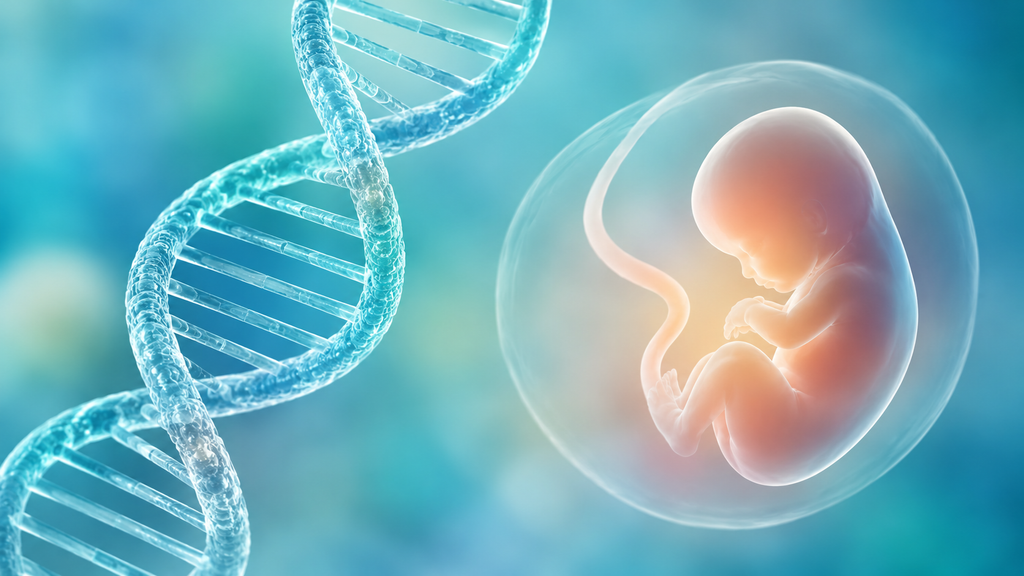
Arnaud Pontin (Image : AI / Gay Globe)
A Gay Globe reader suggested that we publish an article on a subject that is rarely, if ever, discussed. He identifies as an intersex person and wanted us to demystify a term that he does not wish to see associated with sexual orientation. Let’s take a closer look…
Between genetics, embryonic development and medicine, some people are born with sex characteristics that do not entirely fit the usual definitions of the male or female body. It is a natural reality that has long been misunderstood and, at times, surrounded by silence.
Nature includes biological phenomena that remind us that living organisms cannot always be neatly confined to simple categories. Human beings are no exception. Some people are born with sex characteristics that involve chromosomal, hormonal or anatomical variations. This reality, now referred to as intersex variation, was long described by a much older term: hermaphroditism.
Although the latter word is still used in everyday language, contemporary medicine generally prefers the expressions “variations in sex development” or “variations in sex characteristics.” This change in terminology is not simply a matter of modernizing language. It reflects a better scientific understanding of a human reality that is far more diverse than previously believed.
A variation that begins before birth
Human sexual development is a complex process that begins during the earliest stages of embryonic life. It involves chromosomes, genes, hormones, gonads and the formation of reproductive organs.
In most cases, these different elements follow biological pathways commonly associated with the female or male sex. However, certain variations can alter this process and produce characteristics that do not correspond exactly to the usual patterns.
These variations may involve sex chromosomes, hormone production, the way the body responds to hormones, or the development of internal and external reproductive organs.
There are many different types of variations. Some are visible at birth, while others are not discovered until puberty, during a medical examination or even in adulthood. Some produce no obvious external signs.
It is therefore impossible to reliably identify an intersex person based solely on physical appearance.
A reality more common than one might think
According to estimates presented by the United Nations, intersex variations may affect between 0.05% and 1.7% of the world’s population. This considerable difference depends, in particular, on the medical definition used and the biological characteristics included in the calculations.
It is important to understand that intersex variation is not a single condition. It encompasses many distinct medical situations, some of which are extremely rare.
Documented examples include certain chromosomal variations, androgen insensitivity, congenital adrenal hyperplasia and various forms of atypical gonadal development.
Each situation has its own characteristics. Some require no specific treatment, while others may call for medical follow-up, particularly when hormonal imbalances or physiological complications are present.
Medicine therefore cannot apply a single approach to everyone concerned.
The old term “hermaphroditism”: how its meaning has changed
In older medical texts, the word hermaphroditism was used to describe certain variations in human sexual development. It was also used to describe biological phenomena observed in various animal and plant species.
Today, however, its use in reference to human beings is generally discouraged. It can give the impression that a person simultaneously possesses two complete and functional reproductive systems, which does not reflect the general reality of intersex variations.
One very rare medical condition, known as ovotesticular development, involves the presence of both ovarian and testicular tissue in the same person. It represents one specific situation among many other possible biological variations.
It is therefore important not to confuse this particular condition with intersex variation as a whole.
Medicine confronts its own practices
The medical history of intersex variation also includes episodes that now raise significant ethical questions.
For several decades, certain surgical procedures were performed very early in the lives of children born with atypical sex characteristics. The aim was often to make their anatomy conform to an appearance considered typically male or female.
These procedures could be performed before children were able to understand their situation or take part in decisions concerning their own bodies.
As scientific knowledge has evolved and intersex people have become increasingly involved in medical discussions, these practices have come under considerable criticism. Questions of consent, medical necessity and long-term consequences are now central to the debate.
Specialists increasingly recognize the importance of an individualized approach, providing families with information and, whenever the medical circumstances allow, involving the person concerned in decisions that affect them.
This does not mean that all medical interventions are unnecessary or unjustified. Some situations genuinely require medical care. The essential distinction is between procedures that are necessary for a person’s health and those primarily intended to normalize physical appearance.
A biological reality that does not define identity
It is also important to distinguish intersex variation from sexual orientation and gender identity.
An intersex person may be heterosexual, homosexual, bisexual or have another sexual orientation. They may identify as a man, a woman or with another gender identity.
These dimensions are not interchangeable.
Intersex variation concerns the innate biological characteristics of sexual development. Sexual orientation concerns emotional or sexual attraction, while gender identity refers to how a person identifies.
This distinction is important, particularly in media outlets that cover LGBTQ+ issues. It makes it possible to provide information without confusing different human experiences.
Understanding rather than judging
Intersex variation reminds us that human biology encompasses a diversity that deserves to be studied rigorously and without prejudice.
For a long time, people concerned have had to live with medical explanations that were sometimes incomplete, terminology that did not suit them and, in some cases, decisions made without their involvement.
Today, advances in genetics, endocrinology and specialized medicine are helping us better understand these variations. But scientific knowledge alone is not enough. We must also recognize every person’s right to be informed, respected and heard.
There is no need to turn a biological variation into a curiosity or a spectacle in order to explain it. Intersex variation is part of the diversity of human development. Understanding it also means recognizing that a person’s dignity never depends on whether their body conforms to a conventional definition.
Research Sources for This Article
- United Nations Office of the High Commissioner for Human Rights – Fact Sheet on Intersex People.
- Pediatric Urologists of Canada – Scientific Position Statement on Variations in Sex Development.
- NHS – Differences in Sex Development.
- Council of Europe – Recommendation on the Rights of Intersex People, 2025.
ADVERTISING

Read Also
1. Hepatitis A and Hepatitis B Vaccination in Gay Men: From the 1990s Public Health Campaigns to Bepirovirsen Innovation
https://gayglobe.net/en/hepatitis-a-b-vaccination-gay-men-1990s-bepirovirsen/
2. HIV: What “Undetectable = Untransmittable” Really Means and the Risks of a Viral Blip
https://gayglobe.net/hiv-what-undetectable-untransmittable-really-means-and-the-risks-of-a-viral-blip/
3. HIV Is No Longer a Death Sentence: End of an Era and Historic Closure in Toronto
https://gayglobe.net/hiv-is-no-longer-a-death-sentence-end-of-an-era-and-historic-closure-in-toronto/
4. Why Is There a Vaccine for COVID but Not for HIV if They Are Both Viruses?
https://gayglobe.net/why-is-there-a-vaccine-for-covid-but-not-for-hiv-if-they-are-both-viruses/
5. HPV Vaccine: Near-Complete Protection Against Several Cancers Confirmed in Europe and North America
https://gayglobe.net/en/hpv-vaccine-protection-cancers/
6. Fibromyalgia and Magnesium Deficiency: Symptoms, Diagnosis and Supplementation
https://gayglobe.net/en/fibromyalgia-vs-magnesium-deficiency-symptoms-diagnosis-treatment/