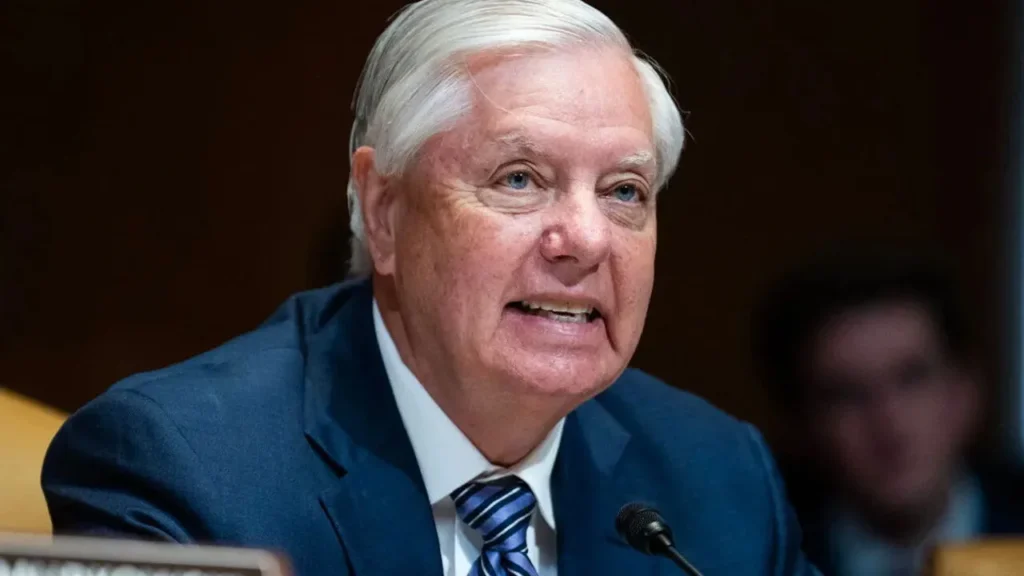
Roger-Luc Chayer (Image : The Economist)
Following the sudden death of Senator Lindsay Graham, I initially felt no need to publish any article about this controversial figure, given the nature of many of his actions and political positions toward the LGBTQ+ communities as a whole. However, after several days of reflection and research into the impact of his decisions and votes, both on Americans and on the rest of the world, I could no longer remain silent. I felt compelled to present his record so that readers could form their own opinion of the man.
Lindsay Graham was an American politician and a member of the Republican Party. Born on July 9, 1955, in Central, South Carolina, he earned a law degree and served as an officer in the United States Air Force before beginning his political career. Elected to the United States House of Representatives in 1994, he became a U.S. Senator from South Carolina in 2003.
Long regarded as an interventionist Republican on foreign policy issues, Graham was also known for his conservative positions on social matters, including his opposition to same-sex marriage, his support for several restrictions affecting LGBTQ+ rights, and his backing of anti-abortion policies. Over the years, he became one of the closest allies of Donald Trump in the U.S. Senate, despite a previously strained relationship between the two men.
Lindsay Graham’s Record on LGBTQ+ Rights: Decades of Conservative Positions
Throughout his political career, Republican Senator Lindsay Graham, who represented South Carolina since 2003, became known for positions largely opposed to several legislative advances promoted by LGBTQ+ rights organizations. His congressional record reflects consistent support for policies promoted by the conservative wing of the Republican Party.
In the early 2000s, Graham opposed the recognition of same-sex marriage and supported initiatives aimed at defining marriage in the United States Constitution as a union exclusively between a man and a woman. Although these efforts failed in Congress, they had a lasting impact on the American political debate.
The senator also opposed the repeal of the military policy known as “Don’t Ask, Don’t Tell,” which prevented openly gay and lesbian service members from serving in the U.S. Armed Forces. In 2010, he voted against ending the policy, despite changing public opinion and recommendations from numerous military officials.
On legislative matters, Lindsay Graham repeatedly received low ratings from major American LGBTQ+ rights organizations, particularly because of his votes concerning protections against discrimination, the rights of same-sex couples, and the rights of transgender people.
In 2022, Graham voted against the Respect for Marriage Act, a federal law designed to protect the recognition of same-sex marriages and interracial marriages, even if the U.S. Supreme Court were to reverse its historic decision in Obergefell v. Hodges. The legislation was ultimately passed with bipartisan support.
The senator also expressed support for several Republican initiatives aimed at limiting the participation of transgender people in certain school sports and restricting access for minors to gender-affirming care, arguing that these issues should fall under state authority.
More broadly, Lindsay Graham aligned himself with the conservative social positions of his party regarding religious freedom, supporting measures that allow certain organizations or businesses to invoke religious beliefs in situations involving LGBTQ+ rights. Supporters of these laws describe them as protections of conscience and religious liberty, while civil rights organizations argue that they may create mechanisms that enable discrimination.
His positions earned him continued criticism from organizations such as Human Rights Campaign, GLAAD, and Lambda Legal, which have repeatedly challenged his opposition to major reforms promoting equal rights. Conversely, conservative and religious groups have praised his defense of what they describe as traditional values.
LINDSAY GRAHAM: A REPRESSED HOMOSEXUAL?
For many years, persistent rumors circulated in the United States regarding Lindsay Graham’s sexual orientation. These speculations were fueled by his lifelong bachelor status, his strong privacy regarding his personal life, and comments made at various times on social media, by comedians, commentators, or political opponents. These rumors resurfaced repeatedly in public discussions, particularly during election campaigns or controversies surrounding his positions on LGBTQ+ rights.
Despite their persistence, no serious journalistic investigation or credible evidence has ever confirmed these claims. Lindsay Graham has always refused to discuss his private life in detail and has never publicly identified himself as gay or bisexual. When questioned about these rumors, he generally responded with humor or avoided further controversy, without providing details about his personal situation.
In a society where the private lives of public figures often become subjects of speculation, many observers have emphasized the importance of distinguishing between rumors and facts. Fundamental principles of journalism require that information not be presented as truth unless it can be supported by reliable and independent sources.
Several LGBTQ+ rights organizations have also emphasized over the years that a person’s sexual orientation, whether real or alleged, should not be used as a political weapon or as a means of discrediting a public figure. They argue that public debate should instead focus on the decisions, votes, statements, and policies defended by elected officials, since these are matters of public interest that can be objectively documented.
Although rumors regarding Lindsay Graham circulated widely for decades, they have never been supported by verified facts. His political record, however, remains a legitimate subject of analysis, as it is documented through his votes, public statements, and legislative initiatives that he supported or opposed throughout his career.
ADVERTISING
