Roger-Luc Chayer (Photo : Pixabay)
You will certainly have noticed: for the past few years, there has been a great deal of discussion about gay, lesbian, bisexual, trans, queer people and everyone else who identifies with the famous LGBTQ+ acronym. These letters are now associated with a multitude of social issues in Western democracies. But, let’s be honest, when we talk about LGBTQ+ people, it is not always to announce good news.
Discrimination, violence, assaults, abusive laws, setbacks in rights, hate campaigns: LGBTQ+ news sometimes looks more like a war bulletin than a social affairs column.
And then, for some time now, drag queens have become the preferred target of certain groups who seem to have discovered a new threat to humanity: artists wearing wigs, makeup and dresses who, supposedly, could influence children to the point of making them “become” homosexual.
Yes, you read that correctly
Because apparently, a child who attends a drag queen show could somehow change their sexual orientation as easily as changing television channels.
Yet shows aimed at children are nothing new. Neither are clowns. In Quebec, Patof and Capitaine Bonhomme made generations of children laugh. Thousands of young people watched these colorful, sometimes completely extravagant characters. And, curiously enough, we have never witnessed hordes of uninhibited homosexuals emerging as a result of these programs.
Perhaps it’s time to take a breath
The reality, however, is much more serious than these stories about wigs and makeup. LGBTQ+ people now occupy an important place in the media, culture and public debate. More and more, people are learning about our history, our symbols, our realities and our rights. And that is clearly disturbing to some people.
On social media, the phenomenon is even more concerning. We are seeing increasingly virulent opposition to LGBTQ+ people, sometimes going as far as threats and calls for violence. Individuals who do not know us, who do not interact with us and whose lives should absolutely not be affected by our sexual orientation or gender identity nevertheless devote an enormous amount of time to denouncing us.
But why?
What could possibly be so threatening about a gay, lesbian, trans or queer person simply living their life peacefully? How can two men who love each other, two women who are in a relationship, or a person simply seeking to live according to their identity become an existential threat to someone else?
When I was contributing to Magazine RG, between 1993 and 1998, I had already raised, in one of my articles, the need for caution when it comes to excesses, whether they come from the left or the right. I explained that, as in any other field, going too far inevitably ends up provoking a reflex of resistance, sometimes even without any truly legitimate reason.
The Pendulum Effect
The pendulum effect, when discussing LGBTQ+ issues, refers to the idea that a society can respond to a period of rapid progress, increased visibility or major social change with an opposing movement of resistance.
The pendulum effect can emerge when part of the population feels that changes are happening too quickly, that they are being imposed upon them, or that certain demands go beyond what they consider acceptable. This perception can then be exploited politically or amplified through social media.
For example, the gradual recognition of same-sex couples and LGBTQ+ rights has represented a major social change. At the same time, much greater visibility of LGBTQ+ realities — in advertising, the media, schools, popular culture or public events — can provoke a backlash among some people.
And this reaction can sometimes go beyond simple ideological opposition: it can turn into hate campaigns, disinformation, discrimination or even calls for violence.
History teaches us that no social movement is completely immune to the pendulum effect: when a society moves rapidly in one direction, part of that society may eventually push in the opposite direction. For LGBTQ+ people, the danger is not only underestimating this reaction, but also unintentionally providing it with the arguments it needs.
I am not saying that we should slow down the emancipation of people who wish to participate equally in society and in every aspect of it, without constantly having to hide. But I am one of those who believe that there must be a middle ground, and that exaggeration is not the way to gain a sympathetic ear. Putting too much pepper in the soup does not necessarily turn us into pepper worshippers.
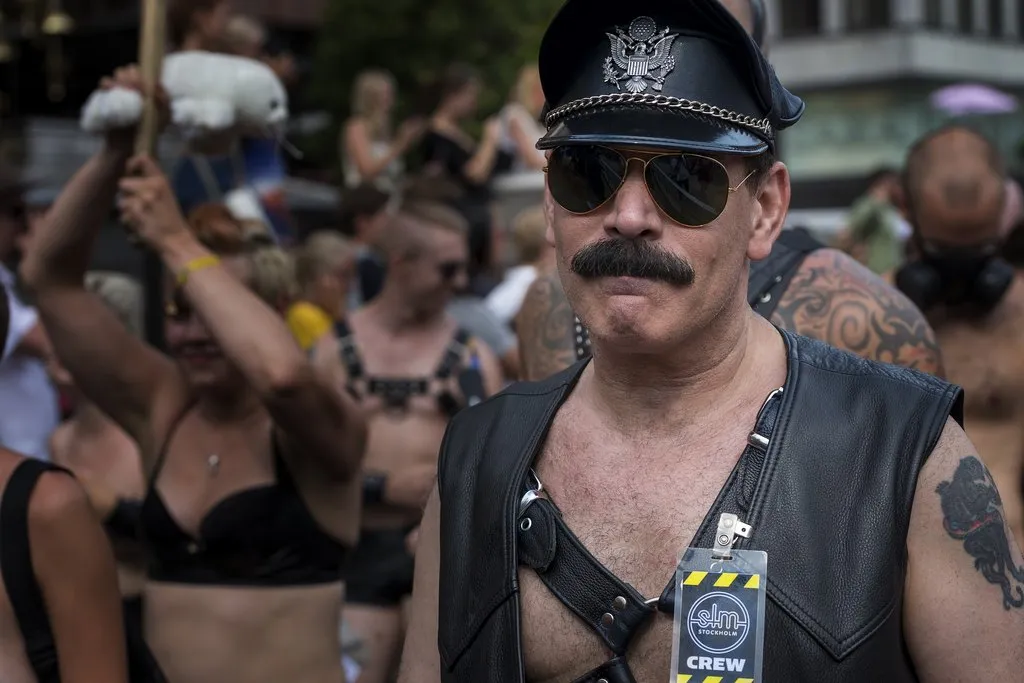
I was looking at images from a recent Pride parade in a European city and, even I, as the editor of an LGBTQ+ media outlet and a journalist for nearly 34 years, felt that there were certain excesses that could quite likely shock people in attendance and, above all, allow hateful homophobes to form a false image of our communities by giving them additional arguments with which to spread their hatred.
Two examples particularly shocked me. I put myself in the place of the parents who were accompanying their children. And frankly, I would not have accepted it either if some participants in the parade had given such a visible form to stereotypes that have been used for decades to discredit us.
First example: A group of mature men were walking around wearing T-shirts in Pride colors, but were completely naked from the waist down. A small heart, attached with elastic bands, covered their genitals at the front, but nothing concealed their nudity at the back. They were walking like this in the street, in full public view, some carrying a visible sex toy, in front of spectators who appeared both annoyed and embarrassed.
What exactly were these people advocating for? Respect? Equality? The freedom to be themselves? Without knowing their precise intentions, it is difficult to say. But one question remains: when we ask society to respect us, is it really useful to publicly present such a sexualized image of ourselves in front of families and children?
Freedom of expression is fundamental, as is the freedom to openly live one’s sexual orientation. But freedom also means thinking about the effect our actions can have on those around us. And when a behavior becomes provocative enough to distract from the message we are trying to convey, perhaps we should ask ourselves whether the means we have chosen ultimately end up harming the very cause we claim to defend.
Second example: There is also an international subculture known as “pup play,” in which adults wear masks, ears or accessories resembling those of a dog and, for play or personal expression, adopt certain behaviors associated with puppies. For some people, it is simply a recreational and social activity; for others, the practice may also have a sexual dimension. Again, the issue is not to judge individuals who engage in it in their private lives, but to ask whether every form of expression necessarily needs to be presented as part of a public event intended to represent LGBTQ+ communities as a whole.
During the Pride parade in question, a group practicing “pup play” went well beyond what this practice normally represents, encouraging the public, through gestures that were, to say the least, distasteful, to urinate on participants dressed as dogs. Some even went so far as to mime urinating at the feet of spectators or pretending to defecate, adopting the characteristic position of dogs while doing so.
It was frankly distasteful. And, gay or not, what I saw in these scenes was not sexual orientation, but rather a lack of respect for the public and, more broadly, for society as a whole.
What exactly were these two examples supposed to communicate? Was the goal to make our communities more acceptable to the general public? In my view, it failed.
And then we are surprised by the backlash that the most hateful among them throw right back in our faces! Yet these excesses come from a tiny minority and, fortunately, LGBTQ+ communities absolutely cannot be reduced to this.
I also question the judgment of the organizers. They must have known what these groups represented, been familiar with their practices and, presumably, had some idea of what could happen when they marched in front of the public. From there, one question naturally arises: who is responsible for what is presented in the name of Pride?
An apology, or at least an acknowledgment of responsibility, would certainly be appropriate. Recognizing that certain boundaries have been crossed does not mean rejecting Pride or LGBTQ+ rights. On the contrary, it may also be a way of protecting what we have spent decades building.
ADVERTISING
READ ALSO
The Last Witnesses: What Survivors of the AIDS Epidemic Want to Pass On to Young LGBTQ+ People Before They Are Gone
Read the article on Gay Globe
Being Muslim and Gay in the West: When Identity Becomes a Painful Conflict
Read the article on Gay Globe
11,900 Articles Published: Gay Globe Reaches a New Historic Milestone
Read the article on Gay Globe
Certified Media: Gay Globe Strengthens Trust in the Face of Misinformation
Read the article on Gay Globe
Love Between Men Among the Aztecs: What Spanish Chroniclers Actually Revealed
Read the English article on Gay Globe