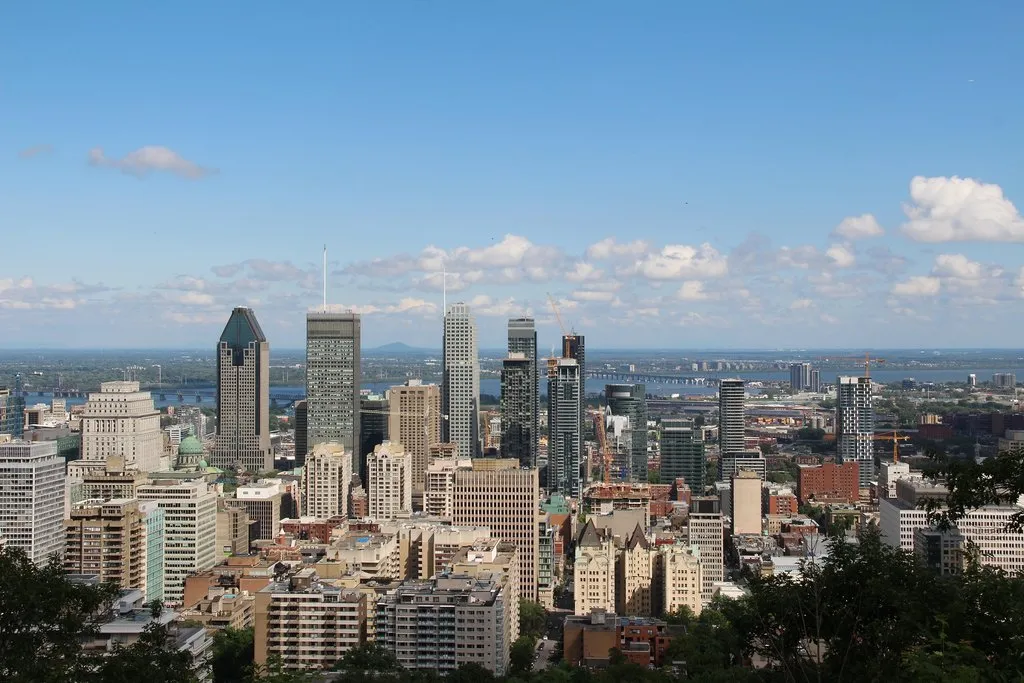
Roger-Luc Chayer (Image : Pixabay)
I was recently talking with a fellow journalist about the state of Montreal, and the conversation quickly went beyond the usual observations we hear every day. Insecurity, homelessness, transportation, cleanliness, housing, municipal management: the problems are numerous, visible, and, above all, increasingly hard to ignore.
He then asked me a simple but remarkably interesting question: if I had to identify five major areas of intervention to get Montreal back on track, which ones would I choose?
The question deserves more than an improvised answer over coffee. So I decided to answer it here, without claiming to have a miracle solution, but with one firm conviction: Montreal is not doomed to stagnation. It can regain its dynamism, its attractiveness and its quality of life, provided it is willing to look its problems in the face and tackle the causes rather than the symptoms.
Here, then, are the five priorities I would place at the top of the list to get Montreal moving again.
1- Montreal is choking under construction sites
We all know it: Montreal has become one giant construction site and, despite successive mayors, no elected official seems truly capable of relieving the city. The first area of intervention, in my view, should be to free Montreal, particularly by putting an end to these ghost construction sites that obstruct traffic while absolutely nothing is happening there for weeks or even months.
The metropolis is the economic heart of Quebec and the greater metropolitan region represents more than half of Quebec’s population. Yet, just like a human heart, obstructing or blocking its main arteries on the pretext that the entire underground network must be rebuilt is voluntarily compromising the circulation that allows the whole system to function.
Do you really think a patient would feel well with 50% of their arteries blocked or severely obstructed? That is exactly what is being inflicted on Montreal, day after day.
The metropolis is somehow trying to survive a continuous urban heart attack, caused by a multiplication of works, detours, closed lanes and construction sites that sometimes appear abandoned. Of course infrastructure must be maintained, streets repaired and networks modernized. But these works still need to be managed with an overall vision, interventions coordinated, and above all the city must not be needlessly paralyzed.
Montreal does not need fewer works. It needs works that are better planned, better coordinated and completed within reasonable timeframes. A city that wants to remain economically viable cannot afford to block its own arteries for months and then claim that everything is fine.
And then there are all these obstacles, these streets made narrower by the addition of curb extensions and bike lanes installed under the pretext of improving air quality by forcing motorists to use their cars less. Between us, that is pure nonsense! We all see the traffic jams and congestion every day, even on weekends. Do you really believe that all these vehicles, including STM buses, improve air quality when they are idling?
And then there are all these obstacles, these artificially narrowed streets created by the addition of curb extensions and bike lanes, put in place under the pretext of improving air quality by encouraging, or even forcing, motorists to use their cars less.
Between us, that is pure nonsense!
We all see the traffic jams and congestion every day, sometimes even on weekends. So let’s be serious: do you really think that hundreds or even thousands of vehicles stuck in traffic, engines idling, including STM buses, contribute to better air quality?
When you reduce the width of lanes, multiply obstacles and concentrate more vehicles on already saturated arteries, you do not make cars disappear. You immobilize them. And a car stuck in a traffic jam remains a car that consumes fuel and produces emissions.
The goal should be to ease traffic flow and promote effective alternatives to the automobile, not to artificially create permanent congestion in the hope that motorists will magically disappear.
By constantly trying to prevent cars from circulating, we end up preventing everyone from circulating.
2- Declare a moratorium on road construction sites
A few months ago I was looking at a map of construction sites on the island of Montreal. Instead of seeing roads, streets and boulevards, I mainly saw a multitude of orange cones indicating ongoing works. There were so many that the road network was barely distinguishable: the territory seemed literally occupied by thousands of construction sites.
But why? How did we reach such an absurd situation? How could a metropolis like Montreal get to the point where works seem to multiply faster than they are completed?
This is a question that must be asked seriously, because beyond the orange cones and detours, it is the quality of life of millions of people and the very functioning of the metropolis that are at stake.
A Gay Globe subscriber recently wrote to me with interesting information about the management of construction sites. We all know that for decades Los Angeles has had one of the largest vehicle fleets in the world. Yet this subscriber, who has lived both in Los Angeles and in Montreal, made a rather surprising observation.
According to him, despite the huge number of vehicles circulating in Los Angeles, it seemed much easier to get around there than in Montreal. What particularly intrigued him was the impressive number of obstacles in Montreal, sometimes on streets or arteries where, for days or even weeks, no worker appeared to be working.
He simply could not understand why so many lanes were blocked or narrowed in Montreal when, in many cases, the works seemed to have stopped.
And his question deserves to be asked: what purpose do all these obstacles serve when there is no one on the site working?
When we talk about the current state of Montreal’s streets, it is easy to point the finger at the many organizations and companies intervening on the territory. But this reality must not be used to dilute the responsibility of the City of Montreal. It is the City that administers the municipal public domain, plans a large part of the works, issues occupancy permits and must ensure overall coordination of what happens on its streets.
The question is therefore not whether the City is responsible for every single construction site. Of course it is not. The question is rather whether it is sufficiently exercising its role as manager of the road network and public space to prevent Montreal from being paralyzed by a succession of obstacles.
And that is where the problem lies.
The City has data on works, obstacles and occupations of the public domain. It knows where the construction sites are, which streets are affected and, in many cases, how long the interventions are supposed to last. It therefore possesses a large part of the information needed to have an overall view of the situation.
But having the information is not enough. It must be used to manage the city effectively.
When a street remains narrowed for weeks and the visible activity on site seems minimal, citizens are entitled to ask who is checking whether the obstacle is still necessary. When a construction site falls behind schedule, who assesses the consequences on traffic? When a phase of works is completed, who ensures that the lanes are reopened quickly?
These are responsibilities that ultimately fall under the municipal management of public space.
The real problem is not the orange cone itself. A cone can be perfectly justified when it protects workers or delimits a work zone. The problem appears when the obstacle becomes almost permanent and seems to function independently of the actual activity on the site.
If only one lane is needed, why close two? If a portion of a street can be reopened, why does it remain closed? If works are interrupted for several days, is there really a reason to maintain exactly the same perimeter of obstruction?
These are management questions, not simply technical ones.
Montreal cannot ask citizens to indefinitely accept the consequences of poorly coordinated works by systematically invoking the complexity of urban infrastructure. Complexity is part of the job of the municipal administration.
And proof of the growing disillusionment of Montrealers with the state of their city can perhaps be found in the number of citizens who choose to leave the metropolis to settle in the suburbs or outside the island, where, according to many accounts, this type of obstacle and constraint related to construction sites is much less present.
For many, leaving Montreal thus becomes a way of recovering a quality of life and mobility they feel they have lost in the metropolis. According to the Institut de la statistique du Québec, Montreal is indeed experiencing a strong population loss to other regions of Quebec.
In 2024-2025, Montreal’s interregional migratory balance was –23,764 people: in other words, about 23,764 more people left Montreal for another region of Quebec than came from other regions to settle there. The net interregional migration rate was –1.28%.
3- Leave no one on the street: intervene at all costs with people in distress
We talk about it a lot, perhaps even too much. We consult, we set up consultation tables, we commission studies and we multiply reports. But in the end, an ever-increasing number of people in distress find themselves on the street, whether because of mental health problems, lack of financial resources in the context of an endless housing crisis, or drug addiction.
We live in a northern city where the difference between the coldest winter temperatures and the hottest summer temperatures can reach nearly 80 degrees Celsius. We would not even leave our domestic animals outside in such climatic conditions, and yet thousands of people are forced to do so. Human beings who have sometimes lost their bearings, their resources and a large part of their dignity, but who are still alive and who still need help.
Why is it that in other cities in Canada, the United States or Europe, this misery seems less visible or better taken care of? Are there really models that work elsewhere?
Finland is certainly one of the most interesting examples. Its approach to tackling homelessness, particularly with the “Housing First” model, demonstrates that it is possible to do things differently by considering housing as a starting point rather than a reward that is only granted after all other problems have been solved.
So why could Montreal not draw more inspiration from this model?
After so much consulting, studying and creating new consultation tables, it is perhaps time to start acting with the same determination devoted to studies and consultations. A person sleeping outside tonight does not need a new consultation table. They need a safe place to sleep, food, care, support and, above all, a real chance to take their life back into their own hands.
The street should never become a default solution.
4- Montreal must leave the C40 and regain control of its decisions
I spoke about this recently in an article published here. This sordid association of cities known as the C40 pursues objectives that essentially revolve around the reduction, or even the progressive disappearance, of car use in urban environments.
Yet Montreal is a member of the C40, but its citizens have never been consulted on the sometimes extremely restrictive measures that can result from this orientation. What’s more, according to available information, this membership never even went to a vote of the municipal council or the executive committee.
A question then arises: how can a city join an international organization whose orientations can have significant consequences on the daily lives of its citizens without those citizens having been consulted and without formal political debate?
It is precisely this lack of transparency and public debate that, in my view, deserves to be questioned. Is the C40 contributing to the strangling of Montreal?
The question may seem provocative, but it deserves to be asked: are the international orientations to which Montreal adheres in the fight against climate change compatible with the daily realities of Montrealers?
Montreal has been a member of the C40 since 2016, an international network bringing together nearly a hundred major cities that collaborate particularly on climate and transportation policies. The C40’s orientations on mobility are particularly ambitious: promoting public transit, walking and cycling, reducing dependence on the automobile and accelerating the transition to zero-emission vehicles.
On paper, no one can be against a cleaner, less polluted city better adapted to climate change.
But an urban policy is not limited to its intentions. It must also be evaluated according to its real consequences on daily life.
In Montreal, the question therefore becomes legitimate: when space devoted to automobiles is reduced, when developments that slow down or divert traffic are multiplied, and when certain arteries are gradually transformed, does the City really have the public transit infrastructure necessary to offer an effective alternative to all those who still depend on their car?
The problem is not the C40 itself. The problem would rather be transposing international models to Montreal without sufficiently taking into account local reality.
In my view, and according to many other Montrealers, it has become urgent and imperative to withdraw the city from this association, to stop following what I consider its blind dogmatism, and to give Montreal elected officials back the freedom to make decisions based first and foremost on the development, vitality and quality of life of their city.
It is more than time for the elected officials of Montreal and the agglomeration to make logical, rational decisions adapted to Montreal reality, rather than multiplying developments that sometimes seem designed more to complicate travel than to facilitate it.
Let us stop placing concrete bands in the middle of streets, sometimes in zigzag patterns, in the name of an ideological vision of urban planning, and start designing the city again according to those who live there, work there, study there, visit it and make it live.
A city should not seek to discourage its citizens and visitors from coming to it. It should make them want to live there, circulate there, consume there and stay there.
Yet when obstacles multiply, when traffic becomes increasingly difficult and access to businesses becomes complicated, it is the entire economic vitality of Montreal that ends up suffering the consequences.
Montreal must regain a sense of priorities. The fight against climate change can and must continue, but it should never be done at the expense of the basic functioning of the metropolis. Montreal must regain control of its decisions and, in my view, leave the C40 as quickly as possible.
5- Regain control of Montreal: reform governance and demand results
For many years, Montrealers, as well as merchants and residents, have complained that their city is taking a direction that does not necessarily correspond to their expectations. And despite elections, petitions, public consultations and demonstrations, how many really feel they are being listened to?
A fundamental question then arises: who really decides the future of Montreal? Do unelected senior officials of the municipal administration have enough power to impose their orientations, to the point of making elected officials unable to challenge them? Or is it simply because the City considers that citizens represent only a negligible variable in the major decisions that shape the metropolis?
Who does what? Who decides what? And above all, who must be accountable to Montrealers?
Municipal democracy should not be limited to asking citizens to vote every four years. Listening to the population also means taking their concerns into account between elections, answering their questions and accepting to review certain decisions when citizens clearly demonstrate that they do not correspond to their needs.
That is why my fifth axis is probably the simplest of all: listen to Montrealers and do what Montrealers ask.
This does not mean that every decision must be submitted to a referendum or that the majority must be right about everything. Governing sometimes requires making difficult decisions. But there is a fundamental difference between governing against public opinion and governing after having genuinely heard those who live, work and invest in the city.
Montreal belongs first to those who live there. Citizens should therefore have a say in how their city is planned, administered and developed.
It is time to put the citizen back at the centre of municipal decisions. Because a city that no longer listens to its population inevitably ends up losing its population… or, at the very least, its support.
Listen to Montrealers. Consult them genuinely. And when their request is reasonable, have the courage to implement it. That is the fifth axis.
Do you also have recommendations to improve the City of Montreal, whether you are a Montrealer or not? Feel free to share your ideas, experiences and suggestions by leaving a comment in the form at the bottom of this page.
READ ALSO
Montreal and C40 Cities: Why Is the Role of Cars Being Gradually Reduced?
Montreal Faces Homelessness: A Reality Tourists Don’t See in the Brochures — and the Loss of Dignity
When Shelters Become a Shock: A Deep Dive into the Reality of Homelessness in Montreal
Montreal’s Gay Village: Soraya Martinez Ferrada Takes Action to Support Local Businesses