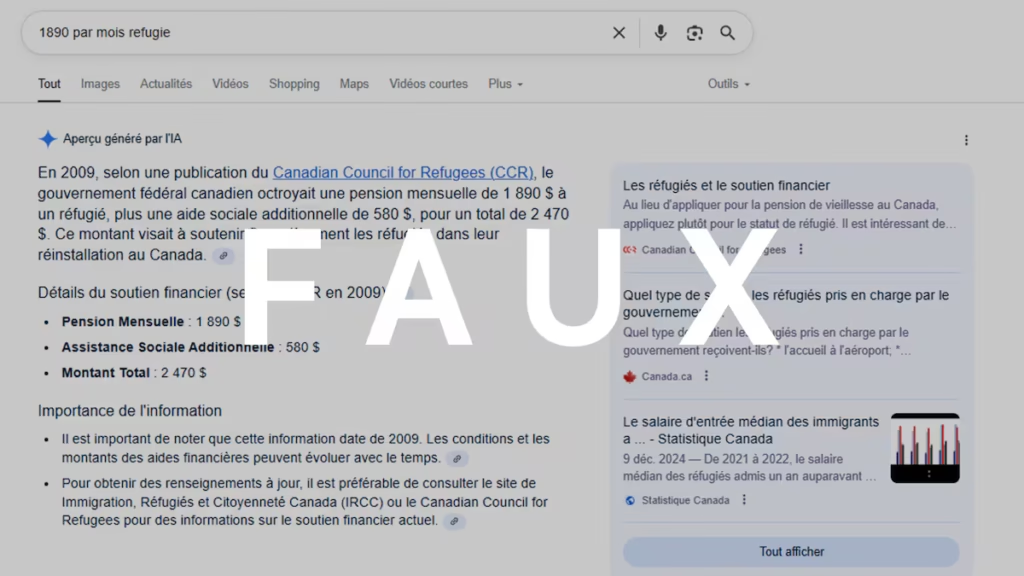
Roger-Luc Chayer (Image : Screen capture of Google by CBC)
A persistent rumor has circulated for years suggesting that all asylum seekers who claim their sexual orientation receive a higher monthly sum than retirees, who may have worked their entire lives.
This false information claims that refugees would receive around $1,800 per month from the federal government and an additional $600 in social assistance from the Quebec government, for a total of approximately $2,400 per month, whereas the federal pension at age 65 is $734.95, to which the maximum Guaranteed Income Supplement of $1,146.16 per month for low-income individuals is added, for a total monthly amount of $1,881.11—well below what these supposed refugees would receive.
Of course, there are some variations depending on the country, but the facts presented are false regardless of the jurisdiction, whether in North America or Europe.
Nothing could be further from the truth: these claims are spread by people who do not verify their sources, and often these rumors are propagated to continually incite hatred toward asylum seekers or people from gay, lesbian, or trans communities.
What is the reality in Canada and Quebec?
In Quebec, government-recognized refugees receive a maximum monthly allowance of approximately $708 for a single person, according to the Canadian Council for Refugees, which also publishes an explanatory refutation of this rumor on its website. The exact amount may vary depending on family size and individual circumstances.
A one-time payment is provided upon arrival to cover essential settlement needs (clothing, household items, opening a bank account, etc.). For a single person, this payment can reach up to $1,300.
Financial assistance (monthly allowance plus start-up aid) is typically available for up to one year, or until the refugee achieves a certain level of self-sufficiency. Health care and schooling are covered by Quebec.
What about the United States, France, or England?
American aid is much larger and more diversified but of very short duration. One can expect a sum of around $4,000 per person upon arrival, in addition to housing, food, and medical and educational coverage. However, this aid is sometimes available only for a few weeks to a few months, depending on the state and the refugee’s ability to work. Asylum seekers are strongly encouraged to enter the labor market as soon as possible.
In France, the system is completely different. The Asylum Seeker Allowance (ADA) provides around €6.80 per day (approximately €204 per month) if housing is provided, or €14.20 per day (approximately €426 per month) if housing is not provided.
After refugee status is recognized, individuals can access the Active Solidarity Income (RSA), approximately €607.75 per month for a single person. Integration services include language courses, help finding housing, and guidance toward social services. The ADA ends at the conclusion of the asylum process. RSA can be received indefinitely, subject to eligibility requirements.
Assistance in England is much more modest, providing roughly $800 per month to applicants.
Canada: a key refuge for persecuted LGBT people
Canada is recognized as one of the most welcoming countries for 2SLGBTQI+ refugees. Since the 1990s, it has been a pioneer in recognizing the right to asylum for people persecuted because of their sexual orientation or gender identity. The Supreme Court of Canada included LGBT individuals in the category of “particular social groups” defining refugee status, allowing asylum seekers to apply upon arrival in the country or from abroad by showing they face a real risk of persecution in their home country.
Canada also provides substantial support to 2SLGBTQI+ refugees through partnerships with organizations like Rainbow Railroad and Egale Canada, helping them settle by providing housing, healthcare, legal services, and community integration programs. The government has implemented specific policies and guidelines to assess these claims with sensitivity and respect. While Canada does not host the largest number of 2SLGBTQI+ refugees in the world, its inclusive policies and support programs make it a model for other countries.
ADVERTISING