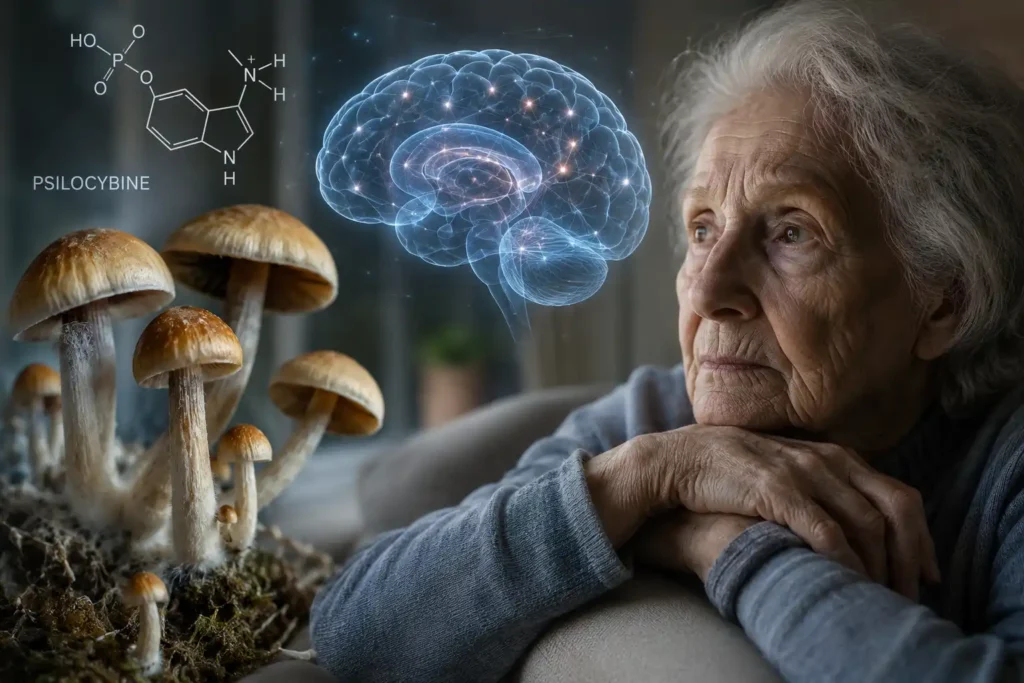
Carle Jasmin (Image : AI / Gay Globe)
A molecule derived from more than 200 species of fungi, and primarily used in humans as a drug, appears to have surprising effects in people living with dementia and Alzheimer’s disease. This molecule is psilocybin, also known as magic mushrooms.
Psilocybin can alter perception, emotions, thought processes, and consciousness. Its effects vary depending on the dose, the individual’s psychological state, and the environment in which it is consumed. It may induce visual and auditory hallucinations, distort the perception of time, and create an increased sense of connection with oneself or the surrounding environment.
For several years, researchers have been studying its potential therapeutic role in treating certain mental health conditions, including treatment-resistant depression, anxiety disorders, post-traumatic stress disorder (PTSD), and certain addictions.
Dementias are a group of neurological diseases that cause a progressive decline in cognitive functions, including memory, reasoning, language, orientation, and the ability to perform daily activities. Unlike normal age-related forgetfulness, dementia significantly impairs brain function and affects a person’s independence.
Alzheimer’s disease is the most common form of dementia, accounting for approximately 60–70% of cases. This neurodegenerative disease involves the abnormal accumulation of proteins in the brain, leading to the progressive destruction of nerve cells and their connections.
Early symptoms of Alzheimer’s disease often include problems with short-term memory, such as forgetting conversations or appointments. Over time, individuals may struggle to recognize loved ones, navigate familiar environments, communicate, or make decisions. In advanced stages, they typically become fully dependent on others for daily care.
Other forms of dementia also exist, including vascular dementia, caused by reduced blood flow to the brain, Lewy body dementia, and frontotemporal dementia. Each has distinct characteristics, but all involve a progressive deterioration of brain function.
In a health article published on Facebook, it is claimed that a woman with Alzheimer’s disease reportedly began speaking again after a single dose of psilocybin. Is this possible?
Yes, but with important nuances.
The article appears to reference a real scientific case report published in 2026 in the journal Frontiers in Neuroscience. Researchers describe a woman in her eighties with advanced Alzheimer’s disease who had barely spoken for several years. After receiving a high dose of psilocybin, she reportedly began engaging in spontaneous conversations again, showed improved recognition of her surroundings, and demonstrated temporary improvements in certain cognitive and physical functions.
However, this should not be interpreted as a cure for Alzheimer’s disease.
The study authors themselves emphasize that this involves a single patient. A single-case study cannot demonstrate that a treatment is broadly effective. They also clarify that their observations do not indicate a reversal or cure of the underlying brain pathology caused by Alzheimer’s disease.
What appears to have occurred is a temporary improvement in certain cognitive abilities that were previously severely impaired. Scientists hypothesize that psilocybin may temporarily reactivate certain brain networks that remain partially functional despite the disease, but this remains speculative and requires much larger clinical trials.
LGBT communities, dementia and Alzheimer’s disease
Do people from LGBT communities tend to experience higher rates of dementia than the general population?
At present, there is no strong evidence showing that gay men are more likely to develop Alzheimer’s disease or other forms of dementia compared to heterosexual men. Researchers emphasize that available data remain limited and that studies specifically focusing on gay men are still scarce.
However, some research suggests that older LGBTQ+ individuals may face higher exposure to risk factors associated with dementia, including depression, social isolation, chronic stress, discrimination, and sometimes reduced access to healthcare. These factors are known to potentially influence long-term brain health.
Interestingly, one study involving LGBTQ+ adults over 60 found that self-reported memory issues were more common among lesbian women, bisexual individuals, and transgender individuals than among gay men. The same study did not conclude that gay men were at higher risk compared to other groups.
In general, across Alzheimer’s disease, women represent a larger proportion of diagnosed cases than men, even after accounting for longer life expectancy.
Does HIV increase the risk of dementia?
Yes. HIV can affect the brain in multiple ways, even when it is well controlled by modern treatments.
When the virus persists in the body over many years, it can cause chronic low-grade inflammation that also affects the central nervous system. In some people living with HIV, this persistent inflammation is associated with cognitive difficulties known as HIV-associated neurocognitive disorders (HAND).
This further strengthens the case for continued research into psilocybin, neurodegenerative diseases, dementia, Alzheimer’s disease, and the potential effects of this molecule on brain aging.
ADVERTISING

READ ALSO
What if immunotherapy could finally defeat HIV? The breakthrough approach that is shaking up science
https://gayglobe.net/en/gay-globe-11900-articles-30-years-lgbtq-media-history/
COVID-19 and mRNA: The Medical Revolution Born from a Pandemic
https://gayglobe.net/en/
Hepatitis A and Hepatitis B Vaccination in Gay Men: From the 1990s Public Health Campaigns to Bepirovirsen Innovation
https://gayglobe.net/en/
Fibromyalgia and magnesium deficiency: symptoms, diagnosis and supplementation
https://gayglobe.net/en/
Discreet organ, intense sensations: the surprising role of the prostate
https://gayglobe.net/en/
Sexual Health and Testicular Health: Understanding the Cremasteric Reflex and Male Protection
https://gayglobe.net/sexual-health-testicular-health-cremasteric-reflex/
Alcohol and Health: The Type of Drink Changes Everything, According to a Major Study
https://gayglobe.net/alcohol-health-drink-type-study/
Analysis of Gay Globe by Artificial Intelligence: Gemini, ChatGPT, Grok and Claude Review GayGlobe.net
https://gayglobe.net/analyse-gay-globe-intelligence-artificielle/
When friendship turns into suspicion: the lingering prejudice between gay and straight men
https://gayglobe.net/en/
International Aid and LGBTQ+ Rights: The Paradox of Countries Receiving Funding Despite Anti-Homosexuality Laws
https://gayglobe.net/en/