Roger-Luc Chayer (Image : AI / Gay Globe)
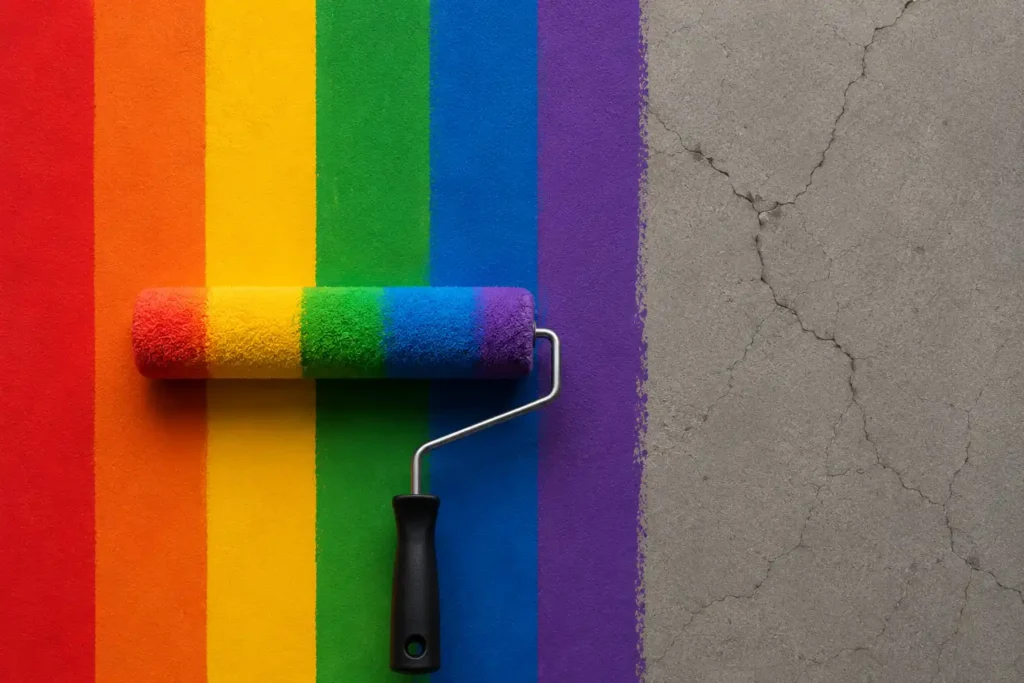
Pinkwashing is a phenomenon that is eroding our societies and polluting the democratic and social landscape of LGBT communities. Large corporations and certain organizations use our symbols of visibility and our colors to appropriate them during major events, before disappearing the rest of the time without following through on their supposed convictions.
Pinkwashing refers to the practice, by a company, organization, or sometimes a political institution, of using imagery and symbols linked to LGBT rights (such as the rainbow flag or diversity campaigns) mainly to improve its public image or for marketing purposes, without any real long-term commitment to the people concerned.
In simple terms, it is when an organization shows support for LGBT communities mainly during visible or popular periods (such as Pride Month), but that support is not followed by concrete actions during the rest of the year, or is primarily used to sell products, attract customers, or restore its reputation.
Pinkwashing is a social fraud.
On an international scale, several major companies are regularly cited in these debates. For example, Coca-Cola is sometimes criticized when it deploys highly visible campaigns during Pride, while being associated by some observers with practices considered inconsistent with these messages in other contexts or markets. Similarly, McDonald’s has been pointed out in some countries for occasional pro-LGBT communications perceived as more marketing-driven than structural.
Amazon and Meta (parent company of Facebook and Instagram) are also sometimes mentioned in these critiques: they take part in visibility or support campaigns during Pride periods, while being regularly questioned by organizations about their internal practices, global policies, or relationships with certain markets and governments.
Nike has also been cited in this type of debate, particularly when collections or campaigns dedicated to LGBT communities are launched in a highly commercial context, leading some to question the depth of engagement beyond communication.
But how, then, should we respond to pinkwashing and fight against it?
Responding to pinkwashing first requires a form of critical vigilance. The idea is not to limit attention to visible symbols—rainbow logos, communication campaigns during Pride Month—but to look at what is actually done throughout the rest of the year.
One way to address it is to demand consistency between public discourse and internal practices: inclusive human resources policies, real protection for LGBT employees, support for community organizations, and continuous rather than occasional engagement. Without these elements, communication can easily remain superficial.
Another important response is the role of consumers, citizens, and the media, who can publicly question companies and demand verifiable proof of commitment. Community organizations also play a central role in distinguishing sincere initiatives from purely marketing operations.
Support can be directed toward actors who act consistently and transparently, rather than those who use LGBT imagery only during favorable media periods.
Boycotts can be a response, but they are neither an automatic solution nor always the most effective tool.
In some cases, they can have a real impact, especially when they are massive, coordinated, and supported by clear evidence of problematic practices. They can push a company to change its communication or certain policies out of fear of reputational or financial loss.
However, their effectiveness is often limited or difficult to measure. Many companies absorb boycotts without changing their structural practices, especially when they are very large or diversified. There is also an “exhaustion” effect: when boycott calls multiply, they can lose strength and clarity.
In my case, and I have done so for many years, when I deal with a supplier or regularly frequent the same business, I make sure to thoroughly verify its involvement with LGBT communities. Let us be clear: this is not about companies that do nothing for our communities, but about those that use our symbols without doing anything afterward, which is far more serious.
I once changed grocery stores in 2006, when the company stated on its website that it had an inclusion and diversity policy, but never responded to my official communications from the magazine. Pinkwashing is also this: using a community’s symbols to better ignore it afterward.
And there is also internal pinkwashing, which causes just as much harm. Some companies clearly identified as LGBT-friendly, whose owners are members of our communities or which are located in areas with a strong LGBT presence, also maintain a problematic relationship with us.
On one hand, these businesses financially benefit from our strong individual or commercial presence around them, but on the other hand, they neglect concrete actions toward our communities. This phenomenon is often seen with large banks in the heart of our gay villages, or major hotels that host us during Pride celebrations, but remain silent the rest of the year. In short, pinkwashing is not only an external issue: it is also, too often, a reality within our own communities.
ADVERTISING

READ ALSO
Rob Jetten: The Young and Bold Face Redefining Dutch Politics
https://gayglobe.net/rob-jetten-biography-climate-lgbt/
11,900 Articles Published: Gay Globe Reaches a New Historic Milestone
https://gayglobe.net/en/gay-globe-11900-articles-30-years-lgbtq-media-history/
Analysis of Gay Globe by Artificial Intelligence: Gemini, ChatGPT, Grok and Claude Review GayGlobe.net
https://gayglobe.net/en/lets-have-a-laugh-analysis-of-gay-globe-by-artificial-intelligence-gemini-chatgpt-grok-claude/
Gay Globe TV: Queerflix LGBT
https://gayglobe.net/gay-globe-tv-queerflix-lgbt/
Agenrisme and LGBTQ+: Debate on Gender Identities and the Complexity of Acronyms
https://gayglobe.net/agenrisme-lgbtq-debat-inclusion-identites-genre-acronymes/
Homosexuality in Prehistory and Queer Archaeology: What Do the Historical Evidence Really Say?
https://gayglobe.net/homosexualite-dans-la-prehistoire-et-archeologie-queer-que-disent-vraiment-les-preuves-historiques/
International Aid and LGBTQ+ Rights: The Paradox of Countries Receiving Funding Despite Anti-Homosexuality Laws
https://gayglobe.net/en/international-aid-lgbtq-rights-paradox/
When Shelters Become a Shock: A Deep Dive into the Reality of Homelessness in Montreal
https://gayglobe.net/en/when-shelters-become-a-shock-montreal-homelessness/
Hepatitis A and Hepatitis B Vaccination in Gay Men: From the 1990s Public Health Campaigns to Bepirovirsen Innovation
https://gayglobe.net/en/hepatitis-a-b-vaccination-gay-men/
Bad Bunny: Global Icon and Ally of LGBT Communities
https://gayglobe.net/en/bad-bunny-global-icon-lgbt-ally/