Roger-Luc Chayer (Image : AI / Gay Globe)
Medetomidine: a concerning new drug detected in Montreal and across North America
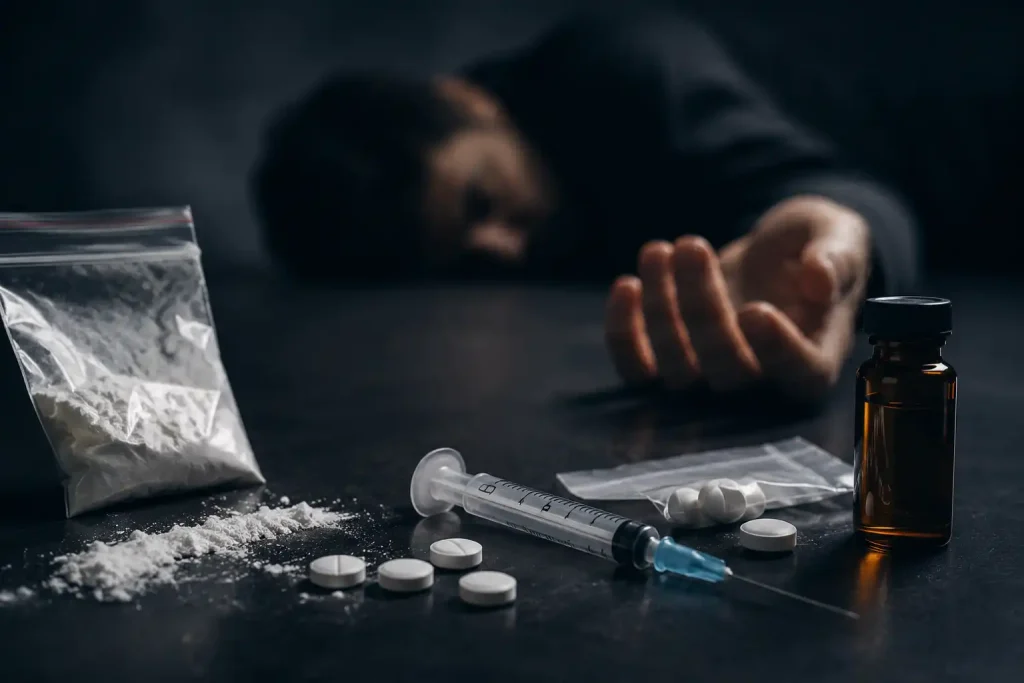
A new drug appeared in Quebec in 2024 and has slowly made its way to Montreal, where it is now being detected in several samples analyzed by federal authorities. The molecule is not only present in Canada: it is currently available across North America and Europe.
Not only is it as toxic and potentially lethal as the hard drugs currently available on the street, but it also causes unusually severe reactions and, even worse, it does not respond to naloxone. This substance is medetomidine.
What is medetomidine?
Medetomidine is a powerful veterinary sedative used mainly to calm or anesthetize animals, including dogs and cats. It acts on the central nervous system by strongly slowing brain activity, breathing, and heart rate.
This substance belongs to the same family as xylazine, sometimes nicknamed “tranq,” which has already been detected in several street drugs in North America. Like xylazine, medetomidine is not an opioid. This means that naloxone, used to reverse opioid overdoses such as fentanyl, does not directly neutralize its effects.
Since 2024, public health authorities and toxicology laboratories have begun detecting medetomidine in illicit drug mixtures, often combined with fentanyl or other substances. Concerns arise from the fact that it can cause extreme sedation, prolonged loss of consciousness, severe respiratory depression, a significant drop in blood pressure, and a dangerous slowing of the heart.
Specialists also fear that this substance increases the risk of death during overdoses, because a person may continue to suffer respiratory or cardiovascular distress even after naloxone is administered. In several cases reported in the United States, first responders observed unconscious victims who did not react as in a typical opioid overdose.
Health authorities nevertheless recommend administering naloxone when an overdose is suspected, since opioids are often present at the same time, and then calling emergency services immediately.
The testimony of Mathieu, 32, from Beloeil
Mathieu, 32, from Beloeil, experienced the worst ordeal of his life.
“I thought I had taken the same thing as usual. A few minutes later, I don’t remember anything. I was told that I collapsed, that I was barely breathing, and that emergency services had to intervene quickly. Doctors later explained to me that the mixture contained medetomidine. I remained in a coma and, honestly, I never thought I would wake up from that.”
Today, he realizes how dangerous this drug is.
“This is not just a bad ‘trip.’ The effects are violent, unpredictable, and much more severe than many people imagine. Even naloxone does not fully work when this substance is involved. That changes everything.”
He now wants to issue a clear warning to users.
“I really want to tell users to take this warning very seriously. Regardless of your experience or habits, no one is safe. Have your substances tested if possible, do not use alone, and make sure someone can call emergency services quickly if something goes wrong. I am alive today thanks to the rapid intervention of paramedics. Not everyone will be that lucky.”
A concerning presence in chemsex environments
The consumption of substances containing medetomidine is sometimes observed in chemsex contexts, a practice that involves using drugs to prolong, intensify, or disinhibit sexual relations, often for several hours or even several days.
In these environments, users may take different substances—sometimes without knowing their exact composition—to increase endurance, euphoria, or feelings of detachment. The problem is that the current illicit drug market is extremely unstable: several products sold as GHB, methamphetamine, ketamine, or opioids may be cut with far more dangerous substances, including medetomidine.
This reality significantly increases the risk of overdose, especially in contexts where multiple substances are consumed simultaneously, where fatigue accumulates, and where users may delay recognizing signs of a medical emergency.
In what form does medetomidine circulate on the street?
On the street, medetomidine is generally not sold under its own name. It appears mainly as a cutting agent in drugs already present on the illicit market, particularly fentanyl and certain synthetic opioids.
Toxicological analyses conducted in North America show that it can be found in different forms:
white or beige powder mixed with fentanyl;
counterfeit pills;
residues in powder bags sold as heroin, fentanyl, or “down”;
sometimes dissolved in injectable mixtures.
As with xylazine, users are often unaware of its presence. It is added to prolong or modify the sedative effect of opioids, but this greatly increases the risk of prolonged loss of consciousness, respiratory arrest, and cardiovascular complications.
What to do in case of medetomidine-related distress?
If a person appears to be in distress after consuming a drug that may contain medetomidine, the situation must be treated as an immediate medical emergency. Symptoms may include deep unconsciousness, very slow or absent breathing, bluish lips, a significant slowing of the heart, extreme weakness, or inability to wake up.
During this time, call 911 immediately, monitor breathing, and keep the airway clear. If the person is not breathing or is barely breathing, artificial respiration is essential. Harm reduction workers often recommend prioritizing ventilation with a mask or mouth-to-mouth when possible, as respiratory depression remains the main danger.
If the person is breathing but remains unconscious, place them in the recovery position to prevent choking in case of vomiting. Never leave them alone.
Contrary to some misconceptions, cold water, slaps, or making the person walk are not effective solutions for this type of severe intoxication. The effects can last a long time and require advanced medical monitoring in a hospital setting.
Harm reduction organizations’ advice
Harm reduction organizations also recommend avoiding using alone, using drug checking services when available, having naloxone accessible at all times, and testing a very small amount before full consumption. They also suggest informing friends or support workers when a new batch is circulating in a given area.
ADVERTISING

READ ALSO