Roger-Luc Chayer (Image : Pixabay)
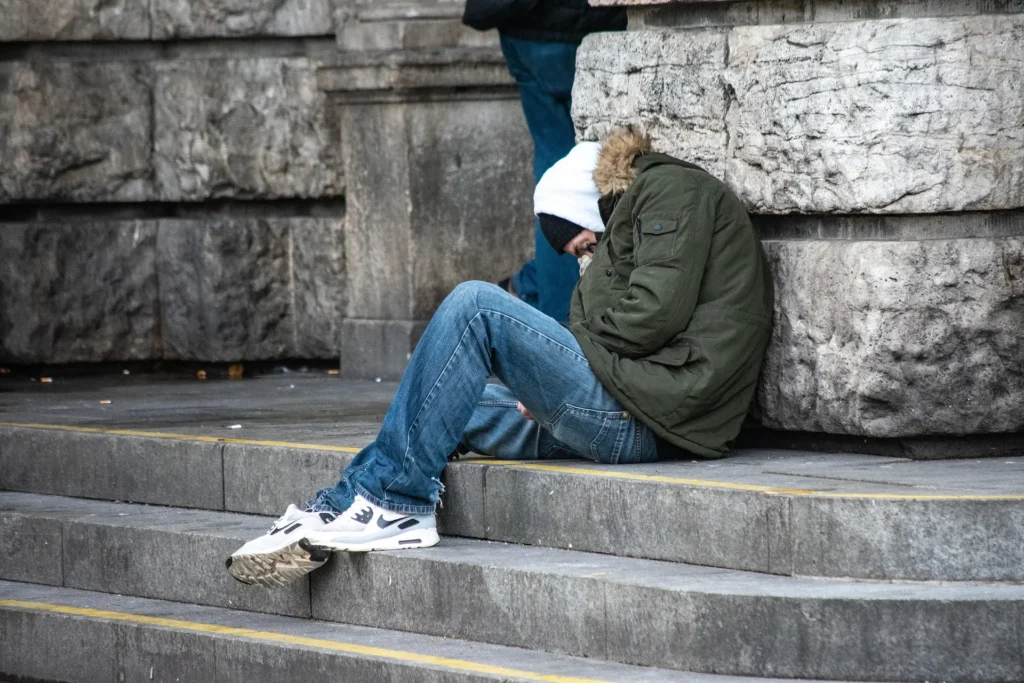
The majority of Western countries are currently facing a major housing crisis, and Canada is no exception. More and more men and women, nearly 35% of whom are said to come from LGBT communities, are ending up on the streets due to lack of housing or the financial resources needed to absorb recent rent increases.
These people find themselves on the streets, and many wonder why they do not go to shelters, why they prefer to live in tents rather than under a roof. Yet very few people know what kind of human hell these homeless people are plunged into when they agree to go to a shelter.
Testimony from a shelter in Montreal
It is thanks to the testimony of Manuel, a 32-year-old gay man from Montreal, that Gay Globe was able to learn much more about life in a homeless shelter, if one can truly call it life.
Manuel had a difficult life journey from childhood, abandoned and left on his own almost all the time by an absent mother and a deceased father. School was not easy, and he quickly dropped out of his studies to fall into drugs, in order to escape a reality he did not want to face head-on.
In Montreal, the profile of people experiencing homelessness is very diverse and does not correspond to a single pattern. There are men and women of all ages, although men remain the majority. There is also a significant presence of Indigenous people, often overrepresented due to historical factors such as colonization, intergenerational trauma, and socioeconomic inequalities.
There are also people from urban backgrounds who have experienced a succession of ruptures: job loss, mental health issues, addictions, family breakdown, or difficulties accessing affordable housing in an increasingly tight market.
There is also a less visible reality, that of hidden homelessness, where people temporarily stay with friends or live in precarious conditions without being constantly on the street. Community organizations in Montreal also point to an increase in case complexity, where mental health issues, addiction, and chronic poverty often overlap, making pathways out of homelessness more difficult.
The shelter experience and the limits of the system
Manuel had stopped using drugs and returned to college studies until he relapsed once, was hospitalized, and then expelled onto the streets. Living from place to place with friends, acquaintances, and even in drug dens, with no sense of security, he decided to give himself a bit of comfort by going to a homeless shelter one evening, and what he experienced there traumatized him.
Manuel was deeply shaken because he was confronted, in a single night, with a reality far harsher and more brutal than he had imagined. In some homeless shelters, especially when overcrowded or in crisis, the environment can be extremely difficult: people in advanced states of substance use, constant agitation, unpredictable behavior, lack of privacy, and poor hygiene conditions. This accumulation can create a constant sense of insecurity.
For someone already weakened by a life marked by rupture and addiction, this type of atmosphere can be shocking. Seeing people in extreme distress, sometimes in mental health crises or under the influence of hard drugs, can trigger personal trauma and reinforce the feeling of an environment without control or protection.
In some contexts, violent situations may also occur, including assaults or sexual violence, further increasing feelings of fear and helplessness. It is not necessarily a single specific event that causes trauma, but rather the overall experience of what he saw, felt, and perceived as a total loss of safety.
People often mistakenly believe that homeless shelters are truly shelters. This is not the case, in general. These facilities must deal with the worst possible social situations by bringing together all kinds of people in the same space. Manuel mentioned that most of the young people he met at the shelter do not return, as conditions are so difficult, and that they sometimes consider themselves safer outside than in these facilities.
This is why encampments in large cities are so numerous: it is a choice. It is therefore difficult to convince these people to give up their freedom and their “security” if what is offered in return feels like living in hell.
Once again, the solution lies in social housing, which could provide a way out for many of them. No Nobel Prize is needed to understand this: a few visits to homeless shelters are enough to show that they are not a starting point toward stabilization of living conditions, but rather, in some cases, an environment that further complicates pathways out of homelessness, despite what shelter administrators may claim.
ADVERTISING

This phenomenon is directly linked to the housing crisis in Canada, which has already been analyzed in our previous reports.
- Gay, lesbian, and transgender youth overrepresented in homelessness
https://gayglobe.net/gay-lesbian-and-transgender-youth-overrepresented-in-homelessness/
- The housing crisis in major Western cities (section of same English article)
https://gayglobe.net/gay-lesbian-and-transgender-youth-overrepresented-in-homelessness/
- Chemsex: An unprecedented death toll in Montreal
https://gayglobe.net/chemsex-an-unprecedented-death-toll-in-montreal/
- The housing crisis continues when simple solutions exist
https://gayglobe.net/why-does-the-housing-crisis-continue-when-simple-solutions-exist/
- ITINERANCY VILLAGE: THE STORY OF IRAM (English sections included in article)
https://gayglobe.net/itinerance-village-lhistoire-diram/
- Sexuality and homelessness in Montreal, Canada
https://www.insp.ngo/articles/opinion/sexuality-and-homelessness-in-montreal-canada/
(referenced in Gay Globe ecosystem)
- Village: between refuge and precarity (English excerpts in article)
https://gayglobe.net/les-jeunes-gais-lesbiennes-et-trans-surrepresentes-dans-litinerance/
- When homelessness becomes visible in Montreal streets (embedded English sections in housing articles)
https://gayglobe.net/montreal-en-crise-itenirance-logement/
- LGBTQ2S+ people and housing discrimination in Canada
https://gayglobe.net/gay-lesbian-and-transgender-youth-overrepresented-in-homelessness/
- Montreal housing crisis and social exclusion analysis
https://gayglobe.net/why-does-the-housing-crisis-continue-when-simple-solutions-exist/