Arnaud Pontin (Image : AI / Gay Globe)
The aberration of international subsidies and international economic aid granted to certain countries in need no longer holds up when one becomes aware of a particular reality: in several of these states, homosexuality is still not recognized as a normal orientation and continues to be considered, implicitly or explicitly, as a mental illness.
Several countries that have or have recently had anti-homosexuality laws continue to receive economic aid, humanitarian assistance, or international loans. Among the best-known examples is Uganda, often cited because the country has adopted some of the world’s harshest anti-homosexuality laws while remaining heavily dependent on foreign aid and international funding.
Other countries that have received international aid or funding despite anti-LGBTQ+ laws include notably:
Nigeria
Senegal
Pakistan
Ghana
Tanzania
Zambia
Kenya
Saudi Arabia
Qatar
United Arab Emirates
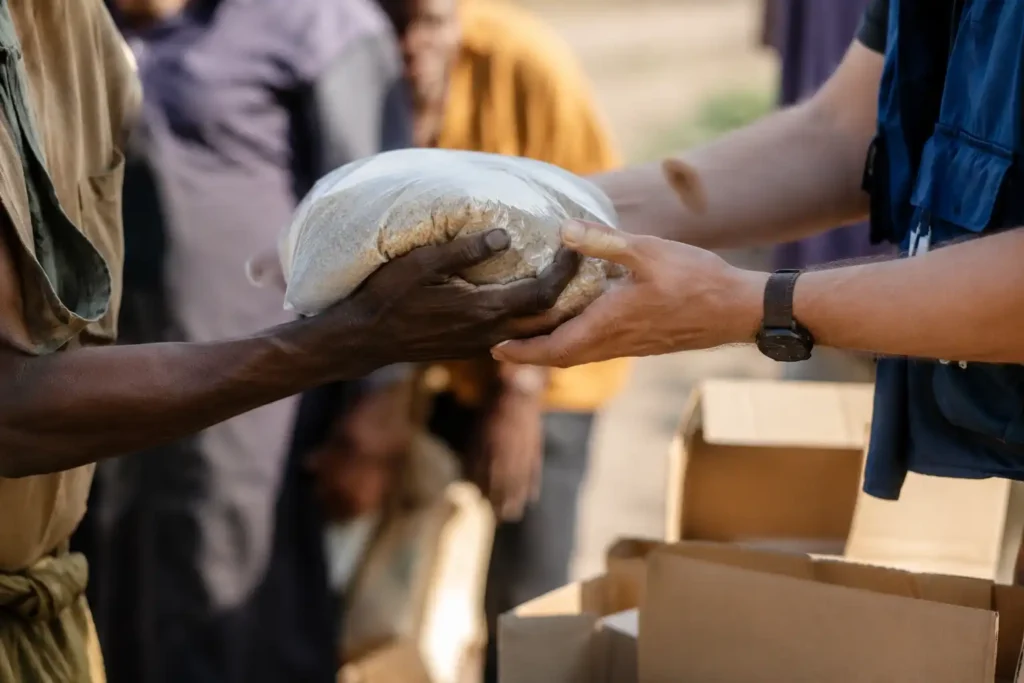
In several African cases, international aid comes from the World Bank, the International Monetary Fund (IMF), European programs, American programs, or United Nations programs aimed at health, education, infrastructure, or food assistance.
The case of Uganda is particularly well documented. After the adoption of strengthened anti-homosexuality laws, some countries such as Sweden, Norway, or Denmark suspended or redirected part of their aid, while other international programs continued through NGOs or multilateral agencies.
Where does the logic come from in financially supporting countries that do not respect the basic principles of the World Health Organization (WHO)?
The logic exists, but it is neither unique nor “morally simple.” It is mainly based on a separation between what a state does politically and what international aid is concretely trying to protect.
In practice, institutions such as the World Health Organization (WHO), the World Bank, or the International Monetary Fund (IMF) do not grant funding based on overall compliance with human rights principles as a whole, but on targeted objectives: vaccinating populations, stabilizing a health system, preventing an economic crisis, containing an epidemic, financing access to water or food.
The central idea is pragmatic: even if a government violates certain standards (human rights, equality, etc.), the population itself remains dependent on basic services. Cutting all international aid can sometimes worsen the situation for citizens without necessarily improving human rights—and can even strengthen existing regimes rather than weaken them.
That said, there is a real and widely criticized tension in this system. On one hand, international aid helps save lives and stabilize fragile countries. On the other, it can create the impression of tolerating or ignoring serious violations of international human rights. This is why some aid is conditional, partially suspended, or redirected toward NGOs to avoid directly strengthening governments that maintain discriminatory policies.
President Barack Obama, at the time, attempted to link U.S. foreign aid with respect for human rights and, in particular, recognition of LGBTQ+ rights.
Concretely, under the Obama administration, the United States integrated LGBTQ+ rights more strongly into its foreign policy through the State Department and USAID. For example, guidelines were issued so that development aid programs would take the protection of sexual minorities into account, particularly in public health areas (HIV/AIDS), access to care, and anti-discrimination efforts.
The administration also strengthened diplomatic messaging: violations of LGBTQ+ rights could be officially raised during bilateral negotiations or in international forums, and certain cooperation programs were redirected or suspended when serious violations were observed.
The United States also directly funded civil society organizations and local NGOs working on human rights and LGBTQ+ rights, rather than relying solely on governments, in order to avoid international aid indirectly supporting discriminatory policies.
And what does the WHO say about it?
The position of the World Health Organization (WHO) is clear and consistent: homosexuality is not a disease.
In 1990, the WHO officially removed homosexuality from the International Classification of Diseases (ICD), marking a major turning point in global medical recognition. Since then, it has been considered a natural variation of human sexuality and not a mental disorder or pathology.
From a public health perspective, the WHO adopts a human rights–based approach and non-discrimination principles. It considers that LGBTQ+ people must have equitable access to healthcare, particularly in HIV/AIDS prevention and treatment, mental health services, and general medical care, without stigma or discrimination.
Would it therefore not be logical to automatically link international financial aid to respect for LGBTQ+ rights?
History shows that automatic sanctions or conditionalities produce mixed effects: in some cases, they exert real pressure; in others, they strengthen existing governments or push states to turn away from Western institutions without improving human rights.
There is also a question of diplomatic coherence. Donor countries have multiple interests (international security, migration, trade, regional stability) that sometimes come into tension with strict and universal conditionality.
But at its core, it requires a willingness to go that far, and we are still far from such a desire among Western countries to directly link international aid to respect for the rights of LGBTQ+ communities.
ADVERTISING

READ ALSO