Roger-Luc Chayer (Picture : Rémi Tamimount)
There are, in the history of humanity, traditions that remind us that we are capable of very great things when we all come together.
A Shared Breath Despite Divisions
When we look at history from a distance, we sometimes get the impression that it is made up only of wars, borders, and divisions. Yet there are also moments, rare but powerful, when humanity seems to have breathed with a single, shared breath.
Original Unity Around Survival
At the very beginning, long before nations and flags, humanity was united by something very simple: survival. We all come from the same ancestors, who set out from Africa to explore the world. The earliest cave paintings, found all across the planet, tell the same story: the need to leave a trace, to tell a story, to say “I was here.” Without knowing one another, humans separated by great distances were nevertheless making the same gesture.
Awareness of Universal Human Rights
There were also moments when humanity drew closer together by becoming aware of its own injustices. When people began to speak of universal human rights, or to question slavery, the idea was simple yet immense: all human beings have the same value. It was not yet applied everywhere, nor perfectly, but the principle was established.
The Olympic Flame: A Symbol of Unity
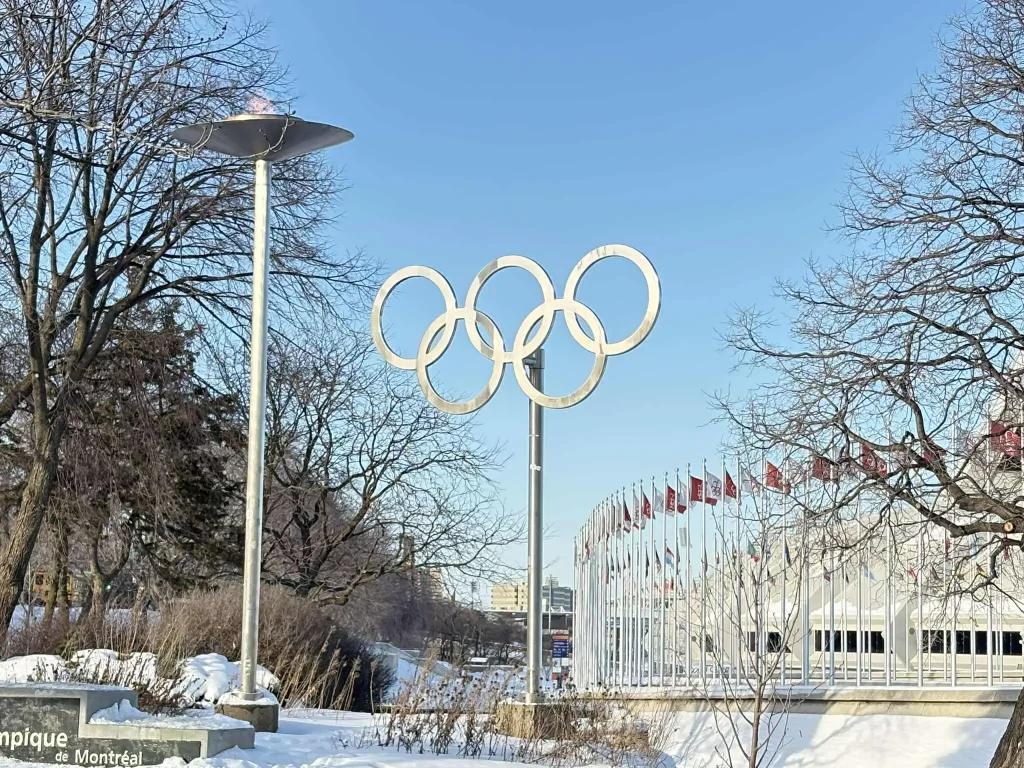
In modern history, the Olympic flame, whether for the Summer or Winter Games, is also a symbol that brings together peoples from all nations. I would bet that few people know that, for each Olympic Games, at the exact moment when the flame is lit in the host city, all the other Olympic cities of modern history also light their flame. This flame remains lit around the world, in unison, for the entire duration of the Games, and they are all extinguished at the moment when the host city extinguishes its own.
This is how, when Milan-Cortina lit its flame, Athens, Paris, London, Berlin, Tokyo, Rome, Mexico, Munich, Montreal, Los Angeles, and dozens of others lit theirs as well.
A Collective Memory That Spans Generations
When several Olympic cities light their flame at the same time, the gesture signifies that the history of the Olympic Games does not disappear with each new edition. Past host cities are not forgotten: they form a chain, a collective memory, as if each Games added a new link rather than starting from scratch. The flame reminds us that the Olympic spirit does not belong to a single city or a single generation, but is passed on.
The Olympic Truce: A Historical Concept
There also existed the concept of an Olympic truce concerning military conflicts around the world. Although this truce was practiced in Antiquity, it is no longer respected in the modern era, even if, at each Olympic Games, a resolution is adopted to renew a theoretical truce.
The Gay Games: Inclusion and Respect at the Heart of the Event
The Gay Games do not have a formal rule equivalent to the ancient Olympic truce, nor a United Nations resolution calling for an end to conflicts. They do not claim to suspend the world’s wars. However, they are built on a foundation of very clear values that point in the same direction: inclusion, respect, non-discrimination, and peace between people.
Where the Olympic Games highlight competition between nations, the Gay Games place the emphasis above all on individuals and communities. There are no national flags at the heart of the event, no medals awarded by country, and no national hierarchy. The message is deliberately depoliticized in the geopolitical sense, but deeply political in the human sense: everyone has the right to participate, regardless of sexual orientation, gender identity, origin, religion, or athletic level.
A Truce of Exclusion Rather Than a Truce of War
Rather than a truce of wars, the Gay Games propose a truce of exclusion. For their duration, they create a space where discrimination is explicitly rejected and where encounters take place without fear. It is another way of speaking about peace: not between states, but between people.
PUBLICITÉ
