
Roger-Luc Chayer (Image : Meta AI / Gay Globe) (Photos : SDC Village : Gay Globe / SDC Prom Masson : Nightlife.ca / SDC Promenade Ontario : Archives Métro, Gracieuseté Camille Gladu-Drouin / SDC Avenue du Mont-Royal : Josie Desmarais/Journal Métro)
Analysis of Montréal’s BIAs and the Gay Village
Following our report yesterday on the economic and social state of Montréal’s Gay Village, several comments were received, pointing, on one hand, to the Village Business Improvement Area (BIA) as partly responsible for the situation, and on the other hand, inviting us to examine other BIAs in Montréal to see that the situation is likely similar there.
This suggestion being highly relevant, I decided to examine the situation with the BIAs of Promenade Masson, Promenade Ontario, and Avenue du Mont-Royal, whose populations share comparable characteristics.
The Village BIA in Montréal
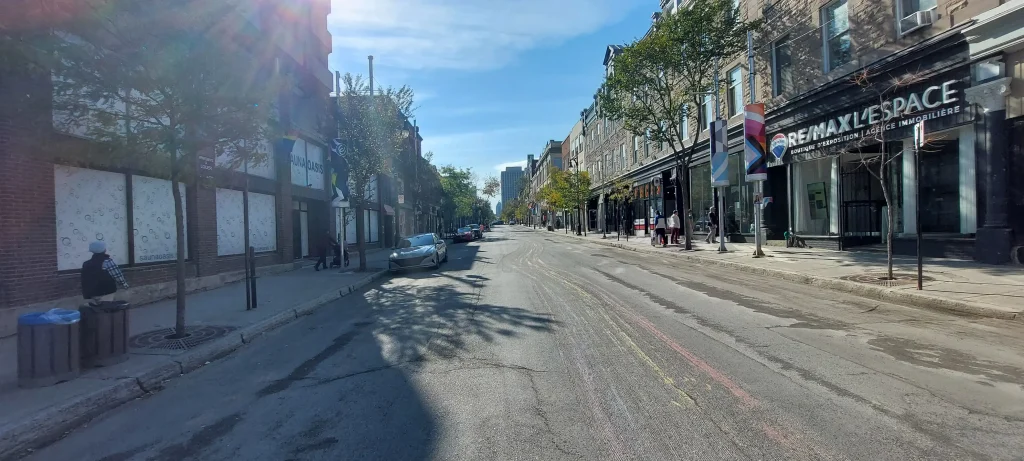
The Village Business Improvement Area in Montréal primarily covers businesses located on Sainte-Catherine East Street, between Berri and Cartier Streets, as well as on Atateken Street, between René-Lévesque East and Robin. This area includes 250 to 300 businesses, according to data compiled from sources including MaCommunauté, OCPM, and Le Grenier aux nouvelles.
The Gay Village, recognized as a major hub of 2SLGBTQ+ life and tourism in Montréal, attracts an impressive number of visitors every summer. In 2025, the BIA recorded over eight million passings on the pedestrian portion of Sainte-Catherine East Street (the compilation method of this figure remains unclear).
The local economy is primarily based on bars, restaurants, patios, retail stores, hotels, and professional services. An ethnographic study commissioned by the BIA highlighted structural vulnerabilities, including dependence on tourism and public art, lack of economic diversification, rising commercial rents, and growing competition between local businesses.
Despite these challenges, merchants remain generally optimistic. A survey among BIA members showed that, even after marked decreases in sales and foot traffic during the pandemic—approximately 72% reported a drop in sales, and 71.5% a decrease in clientele—over 80% intend to continue operations in the Village for at least six more years.
The social fabric of the Village reflects a slowly aging population, some lack of generational succession, and a shift toward greater inclusivity and social diversity.
Promenade Masson: an Example of a Dynamic BIA
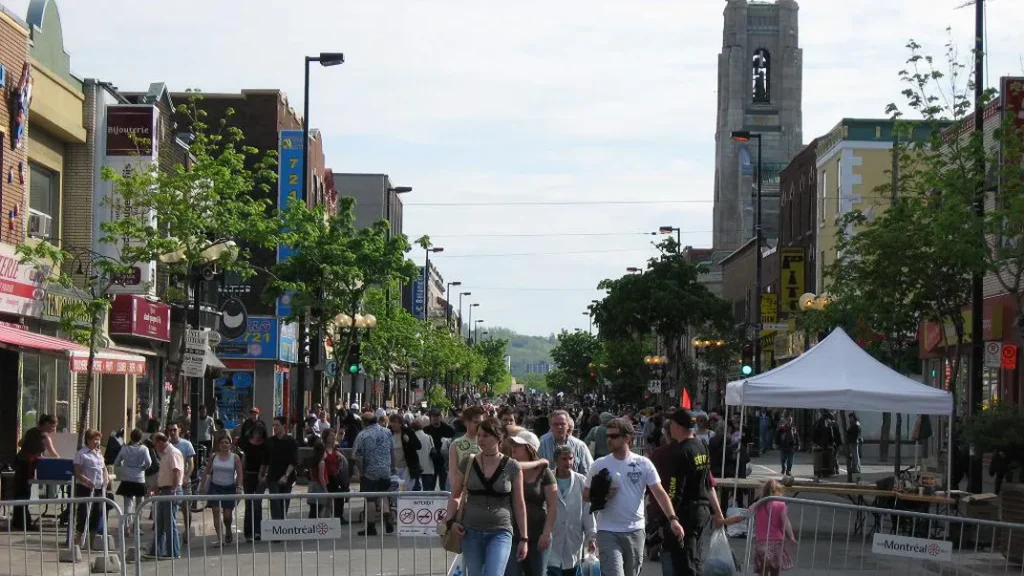
Promenade Masson, or « La Prom » as locals call it, is an exemplary commercial association. During the pandemic, it implemented support programs to maintain economic activity despite lockdowns and other COVID-related challenges. For years, it has led the way in popular events and social management concerning homelessness, which could serve as a model for the Gay Village.
Promenade Masson stretches about one kilometer, between D’Iberville Street and 12th Avenue, in the Rosemont–La Petite-Patrie borough. The organization reports approximately 140 merchants and professionals, while other sources cite more than 150 businesses and services. The City of Montréal lists 102 buildings along the stretch, with a vacancy rate of only 2%, serving a residential population of about 90,000.
Promenade Masson organizes large-scale events, such as the AZIMUT trade fair, held over several days in June, transforming the street into a pedestrian area.
Economically, the street hosts mainly local shops, restaurants, cafés, bars, and professional services. According to the study “Gentrification and Housing Rights in Rosemont” (UQAM), Promenade Masson is undergoing significant changes in retail and services. Challenges include rapid neighborhood evolution, arrival of new residents, increased real estate and commercial pressure, and the need to diversify commercial offerings beyond restaurants and patios.
Promenade Ontario: BIA and Foot Traffic
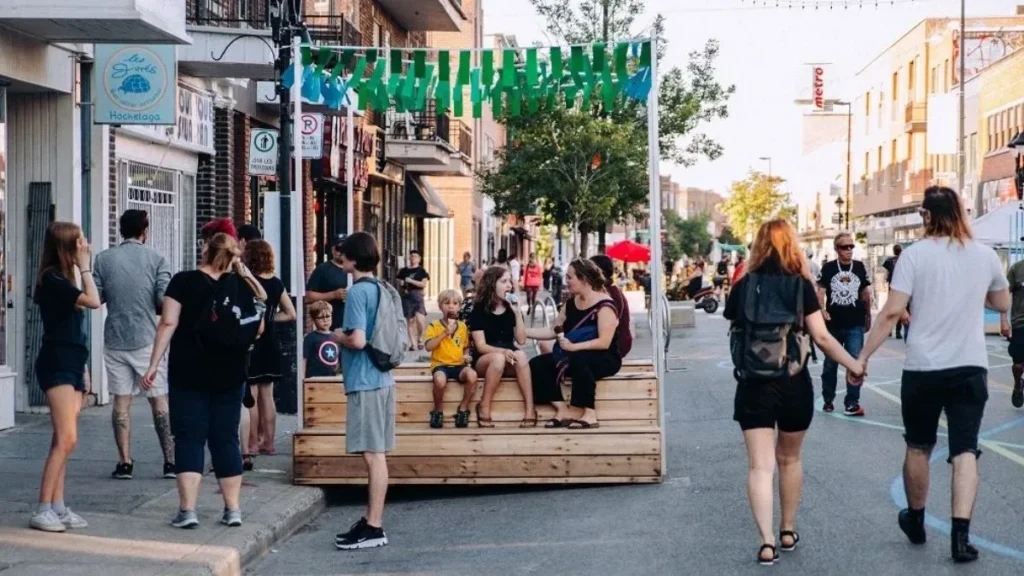
Promenade Ontario, located in Mercier–Hochelaga-Maisonneuve, extends about one kilometer, between Darling Street and Pie-IX Boulevard. This commercial street is managed by the Hochelaga-Maisonneuve BIA, representing over 300 merchants.
In terms of foot traffic, Ontario Street welcomed nearly 4.5 million unique visitors in 2019. In 2022, this figure fell to approximately 60% of the 2019 level, mainly due to a decrease in visitors from outside the area.
The economy of Promenade Ontario relies on a dynamic mix of local businesses, restaurants, cafés, bars, and professional services, typical of a neighborhood commercial street. Rapid neighborhood changes, arrival of new residents, real estate and commercial pressure, and the need to diversify commercial offerings beyond restaurants and patios represent key challenges.
Socially, the neighborhood is in transition, with younger or higher-income residents gradually arriving, changing the social composition and requiring continuous adaptation of services and businesses.
Avenue du Mont-Royal: Diversity and Social Innovation
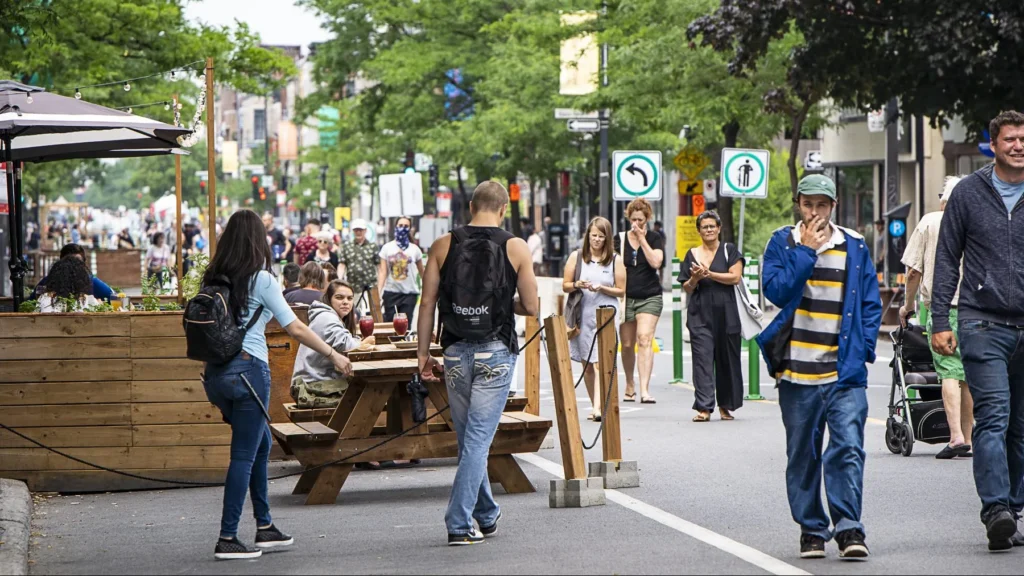
The Avenue du Mont-Royal BIA covers an emblematic street in the Plateau-Mont-Royal, encompassing approximately 475 businesses, including retail, professional services, and restaurants. The organization also manages a subsidiary, Odace Events, organizing cultural and artistic activities throughout the year.
The avenue attracts local and tourist clientele. During summer, particularly between June and September, the avenue is pedestrianized and records peak attendance. In 2022, about 75,000 visitors per day frequented the avenue.
The avenue’s economy is diverse, concentrated in restaurants, professional services, retail, and leisure. The BIA supports its members through initiatives promoting local commerce, ecological transition, and neighborhood life, aspiring to set an example of sustainable business practices and social innovation.
Conclusion: Governance and Transparency of BIAs
By all accounts, only one conclusion arises when comparing commercial development in the Village to surrounding commercial streets with similar populations. The Village faces a homelessness issue that the others do not. This social crisis stems from municipal neglect, which fails to honor LGBT populations and local residents.
Yesterday, the Facebook group Gayquebec2025, responding to the imminent closure of the Village branch of Scotia Bank, stated:
« It is normal for a Business Improvement Area (BIA) to maintain harmonious relations with the borough council, regardless of the party in power. This benefits merchants who are members. However, if the relationship turns the Village BIA into a conduit for political propaganda from city hall, this becomes deplorable. Where the Village BIA may appear questionable to some is in its insistence on the so-called controversial policy of inclusion and coexistence. Rightly or wrongly, the impression is that the BIA supports the philosophy of political decisions made by municipal leaders. This is a very delicate line for an organization that must remain independent, yet is also linked to decisions made by political power. »
Please note that Gayquebec2025 does not take a position in the current electoral campaign and does not allow partisan comments related to the November 2 election. We simply wanted to describe the basic principles that should guide the BIA’s actions.
The Gay Village seems to operate in its own bubble, far from the transparency and participation that characterize other exemplary BIAs. The question arises: do Village BIA leaders have the competence or willingness to implement change? One merchant approached me, frustrated: « Why are we never asked our opinion? Why can’t we vote on projects? Why do we have no say in leader elections? Why? Why? » These repeated frustrations reveal a governance and inclusion deficit the BIA must address to maintain credibility.
Importantly, despite numerous attempts over the years, Gay Globe has rarely received a response from the Village BIA. At most, an acknowledgment of receipt. Everything else remains unanswered. Clearly, the BIA prefers communicating with a more compliant competitor, keeping official communications out of reach of independent media and those seeking to inform the public genuinely.
ADVERTISING