Roger-Luc Chayer (Image : AI / Gay Globe)
What Are Poppers?
Poppers are widely discussed substances, often surrounded by confusion regarding their toxicity, legal status, and real effects. It is time to separate fact from fiction about this widely used recreational inhalant.
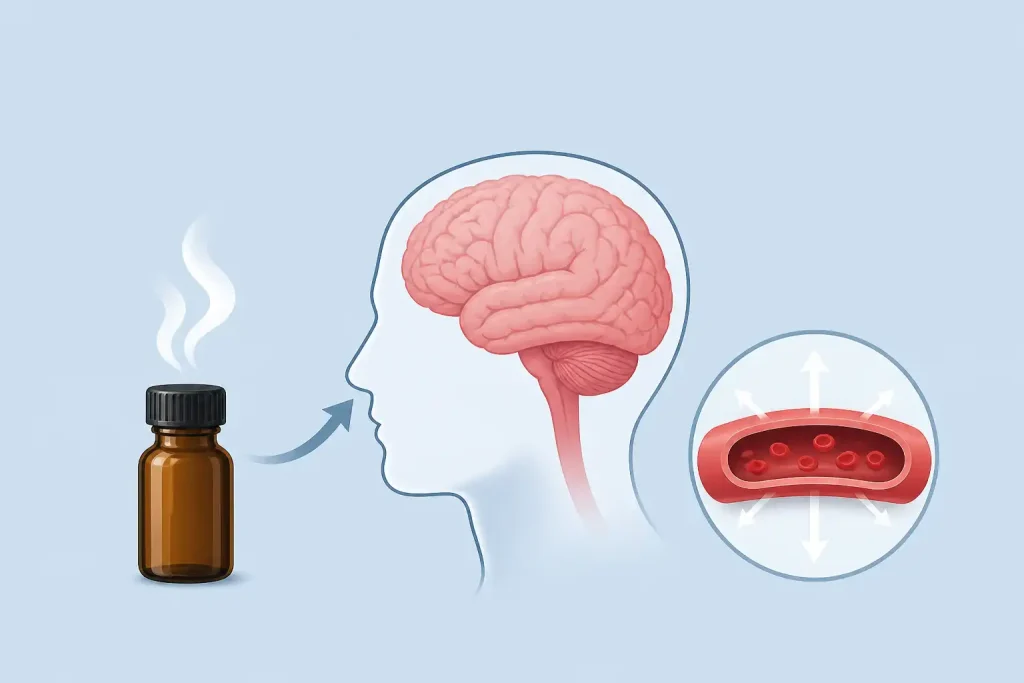
Poppers are small bottles containing highly volatile liquids made of alkyl nitrites such as amyl nitrite or butyl nitrite. Originally, some of these compounds were used in medicine to help dilate blood vessels and improve circulation.
Today, they are mainly known for recreational use. They are not ingested but inhaled, producing effects within seconds: a brief sensation of warmth, muscle relaxation, mild euphoria, and intensified sensory perception. The effects are very short-lived, usually lasting only a few minutes before quickly fading.
Amyl Nitrite: A Classic Form of Poppers
Amyl nitrite is one of the most traditional forms of poppers, known for its relatively smoother and slightly longer-lasting effects compared to other variants.
After inhalation, the effects do not appear as an immediate “shock.” Instead, they develop gradually over a few seconds, with a progressive wave of warmth, muscle relaxation, and mild euphoria. This slower onset is what often distinguishes it from butyl nitrite, which tends to act faster and for a shorter duration.
Although still brief overall, the experience is often described as more fluid and less abrupt, with a slightly extended peak sensation.
Butyl Nitrite: Fast and Widely Used
Butyl nitrite is one of the most commonly used poppers today. It is known for producing a faster, lighter, and often shorter-lasting effect.
The onset is almost immediate, bringing a quick sensation of warmth, relaxation, and mild euphoria. However, the effects typically fade just as quickly as they appear.
Its popularity is partly due to this fast and direct experience, though it is often considered more variable in quality. The composition of products on the market can differ significantly, which may affect both intensity and safety.
Like all alkyl nitrites, it causes vasodilation, leading to a drop in blood pressure. This can result in side effects such as dizziness, headaches, flushing, and in some cases, dangerous interactions with medications used for erectile dysfunction.
Different Types of Poppers
Beyond amyl nitrite and butyl nitrite, several other variants have circulated on the market, including isobutyl nitrite and propyl nitrite. More recent formulations sometimes include pentyl nitrite, often marketed under different commercial names.
A particularly controversial compound is isopropyl nitrite, which has been linked to increased reports of adverse effects, including eye irritation and temporary visual disturbances. This has led to restrictions or bans in several countries.
In reality, the term poppers refers to a family of chemically related substances with varying potency, duration, and perceived comfort. Differences in experience come not only from the molecule itself but also from product purity and manufacturing quality.
Are Poppers Legal?
In Canada, poppers are strictly regulated. Health authorities classify alkyl nitrites as unapproved substances for recreational use. Their sale is prohibited, although personal possession is not always treated as a criminal offence. The main restriction targets distribution, creating a legal grey zone where products may still circulate informally.
In the United States, the situation is more complex. Certain forms of poppers have been restricted, yet they still appear on the market under alternative labels such as cleaning products or industrial solvents. Regulatory agencies like the FDA monitor their use, but national rules remain inconsistent.
In Europe, regulations vary widely. In many countries, poppers are not classified as illegal drugs but are instead regulated as chemical or consumer products. Some countries allow relatively open access, while others impose partial restrictions or bans depending on formulation and safety concerns.
Dependence and Effects on the Brain
Poppers are not considered physically addictive in the same way as substances like alcohol, nicotine, or opioids. They do not directly activate the brain’s classical addiction pathways.
However, a psychological dependence may develop in some users. Because the effects are rapid, short, and associated with pleasure, relaxation, or heightened sensory experiences, repeated use in specific contexts may become habitual, particularly in social or sexual settings. This is better described as a behavioral pattern rather than a medical addiction.
Neurologically, poppers do not appear to cause direct long-term neurotoxicity, but they do produce immediate physiological effects. By rapidly dilating blood vessels and lowering blood pressure, they can temporarily reduce oxygen delivery to the brain, explaining symptoms such as dizziness, light-headedness, or brief discomfort.
Health Effects and Risks
The primary impact of poppers is on the cardiovascular system. The sudden vasodilation they cause leads to a rapid drop in blood pressure, which may result in dizziness, palpitations, weakness, or fainting. Individuals with pre-existing heart conditions may face increased risks.
They can also irritate the respiratory system. Inhalation of chemical vapors may cause burning sensations in the nose, throat, or airways, sometimes leading to coughing or discomfort, especially in sensitive individuals.
Ocular effects have also been reported, particularly with certain formulations such as isopropyl nitrite, including temporary blurred vision and, in rare cases, retinal disturbances.
A major risk involves drug interactions. Combining poppers with medications for erectile dysfunction such as sildenafil can lead to a dangerous drop in blood pressure and should be strictly avoided.
In social or sexual contexts, reduced inhibition and altered perception may also increase risky behaviors, as temporary changes in coordination and judgment can affect decision-making.
ADVERTISING

READ ALSO