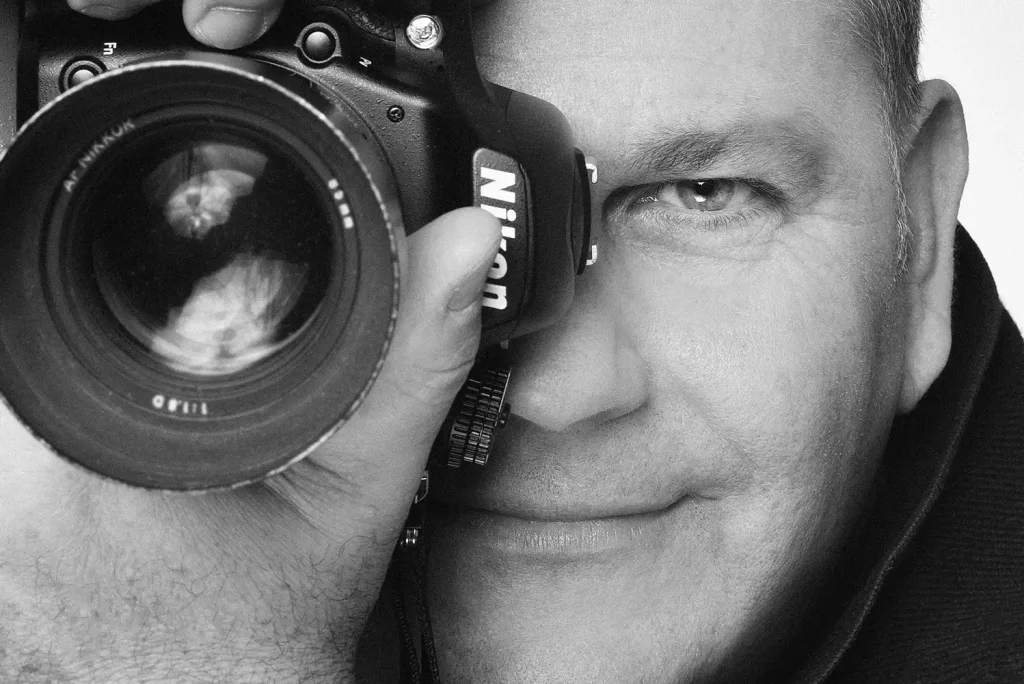
Gérald Henri Vuillien (Photos : Fred Goudon – Instagram.com/fredgoudonphotographe/?hl=fr)
The Ideal of Masculine Beauty Through the Centuries
The ideal of masculine beauty travels through the centuries like a faithful star, indifferent to the whims of the seasons and passing trends. Fashions stir, exhaust themselves, fade away; it remains. While the female nude has invaded canvases, marble, and even our dreams, the male nude, more discreet, almost secret, nonetheless constitutes an immutable canon, a silent architecture of our culture. For the body of a man is not merely flesh: it is symbol, allegory, promise. And it is to this promise that Fred Goudon has chosen to respond.
Fred Goudon: A Reference in Male Nude Photography
A leading figure in contemporary photography, Fred Goudon established himself through his male nudes — from the Dieux du Stade to calendars featuring rugby players and firefighters — with quiet boldness, without unnecessary clamor. He knows, better than anyone, how to reveal the beauty and sensuality of the male body, not through provocation, but through elevation. To those who question him, he speaks of inspiration, trust, and the gaze. For everything begins with the gaze — that mystery which transforms light into emotion.
Passion, for him, is not a word: it is an origin. As a child, he already felt called by art, and more particularly by photography. The beginnings were modest, sometimes harsh. The son of shopkeepers, he worked for many years alongside his family. They offered him the time and freedom to become an artist, never concealing from him the demands of such a choice. Thus he learned that vocation is a risk willingly embraced.
A Male Gaze Conceived for Women
Around him, women of strong character — his mother, his friends, his sisters at heart — encouraged him, supported him, pushed him to assert himself. They were both his support and his compass. Perhaps it was within this feminine complicity that he understood his gaze upon men would meet that of women: a gaze that celebrates virility without caricaturing it, that sublimates eroticism without enslaving it.
For although women inspired him, it is the bodies of men he chose to exalt. Far from rigid academicism, he embraces a frank vision of man in his strength, his simplicity, and his vulnerability as well. Through mass distribution, he enables, with his calendars, the democratization of art. It becomes accessible across all platforms, highlighting that the primary purchasers are women. One then measures how accurate his intuition was: masculine beauty, viewed by a man yet conceived for women, finds here a singular resonance.
Nevertheless, this realization led him to understand that he also needed to engage with his own community. Thus he exhibited at the LGBTQI+ center of Paris Île-de-France, situating his work within a broader reflection on the male artistic gaze and the representation of the body.
The Male Nude in Art History
His work is part of a long history. Greek and Roman Antiquity sculpted the male form with fervor; then centuries shifted attention toward the female body. Fred Goudon, without any spirit of revenge, returns to this original source: man as subject of art, as plastic ideal.
He guides his models with precision, demands from them the best of themselves. If imperfection slips into the image, he begins again, adjusts, chisels the light. For light is his ally — and excellence, his horizon.
One might believe he seeks the perfect man. He seeks better: the perfect moment. The context, the tension, the fleeting grace where naturalness, virility, and a certain innocence converge. Each session is a questioning. He doubts, chooses, sometimes renounces. He even clashes at times with his clients, so sincere are his preferences. He admits it with a smile: he is partial, passionate, almost unfair — yet always faithful to his emotion.
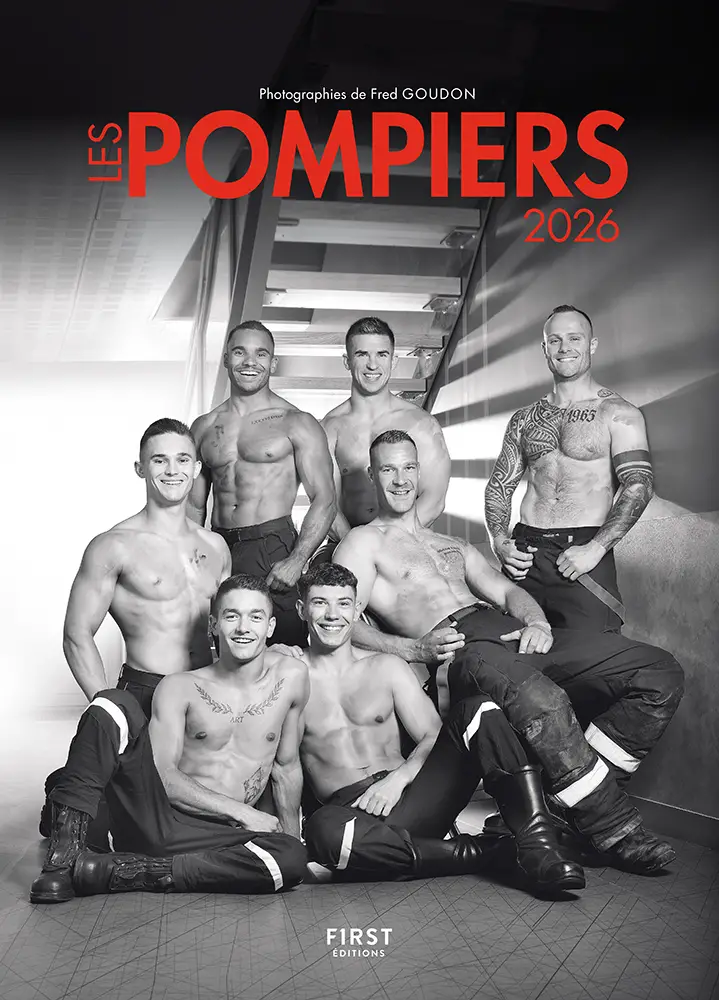
Calendars, Firefighters, and the Democratization of Art
A session for the firefighters’ calendar begins with coffee, croissants, a few words to dispel awkwardness. For he knows how much courage it takes to undress before a lens. Then come silence. Concentration. Men who sometimes do not know one another, gathered in their nudity, become, through the magic of the image, a single work of art. He confides that firefighters possess an extraordinary spirit of cohesion: they end by forming but one body, one energy.
Nothing is left to chance. Scouting, light, the balance of lines: everything is considered. He directs without constraining, suggests more than he imposes. Humor often diffuses tension. And nudity, paradoxically, frees the soul.
He claims the influence of Bruce Weber and Herb Ritts, those masters of black and white who knew how to magnify muscles and curves. Yet he departs from them through a more spontaneous freedom, a more contemporary breath. His black and white is not nostalgic: it is sculptural.
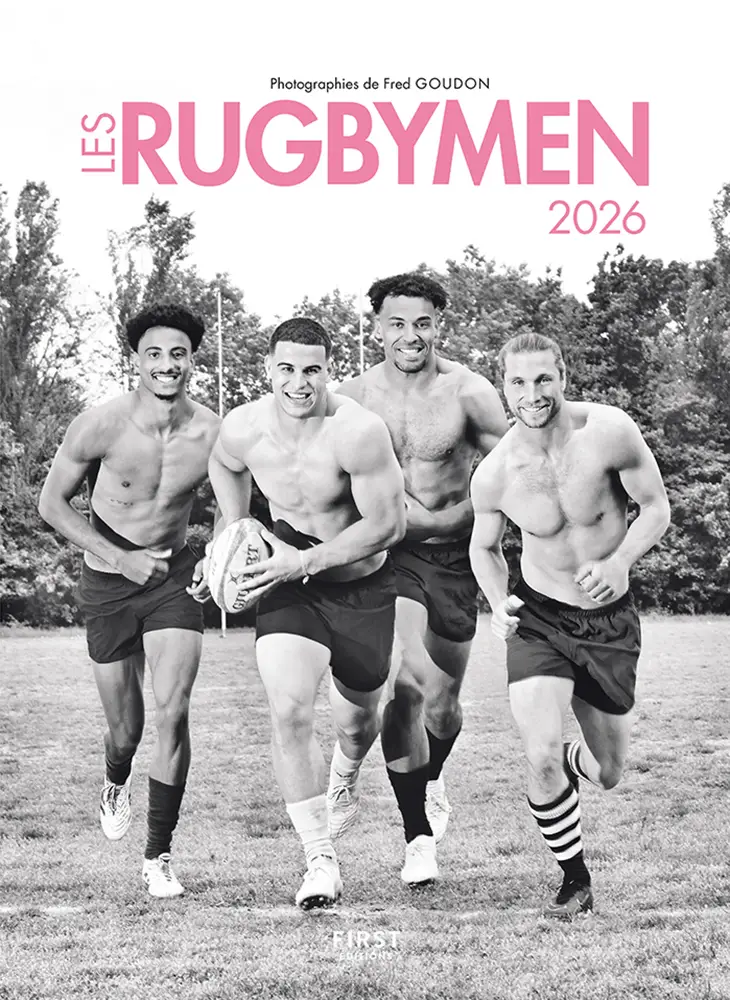
Diversity, Writing, and New Horizons
Diversity matters deeply to him. The models have broadened, grown richer, in step with social evolutions. This openness nourishes his work and anchors it in a world in motion.
And then there is writing. A new adventure, a new audacity. With Embrigadé, co-written with Stan Owiz, he recounts the destiny of a young firefighter who leaves Pau to join Paris and its prestigious elite company — only to discover that the capital can mean vertigo, temptation, downfall. Perhaps one day this story will encounter other lights, those of a screen.
Yet photography remains his home port. Novel covers, exhibitions in Le Cannet, at the Musée des Arts Décoratifs de Paris… And tomorrow, why not Montreal?
For at heart, in Fred Goudon, there is this simple and fervent conviction: beauty exists. It waits only for a gaze to summon it and for a light to reveal it.