Roger-Luc Chayer (Top image: ChatGPT / Gay Globe)
Comparisons Between Different Artificial Intelligences: Surprising Results
I very often compare different artificial intelligences across various fields, and the results are always as surprising as they are varied. This shows that not all AIs operate with the same criteria or algorithms.
Challenging the Three Major AI Tools: ChatGPT, Grok, and Meta
This morning, I decided to challenge the three most important AI tools—ChatGPT, Grok, and Meta—by asking them exactly the same question, or rather giving them the same instruction:
“According to your criteria, create a realistic horizontal panoramic image of the most handsome 25-year-old man you consider a model of beauty.”
Challenge Beyond the Image: Explaining the Choices
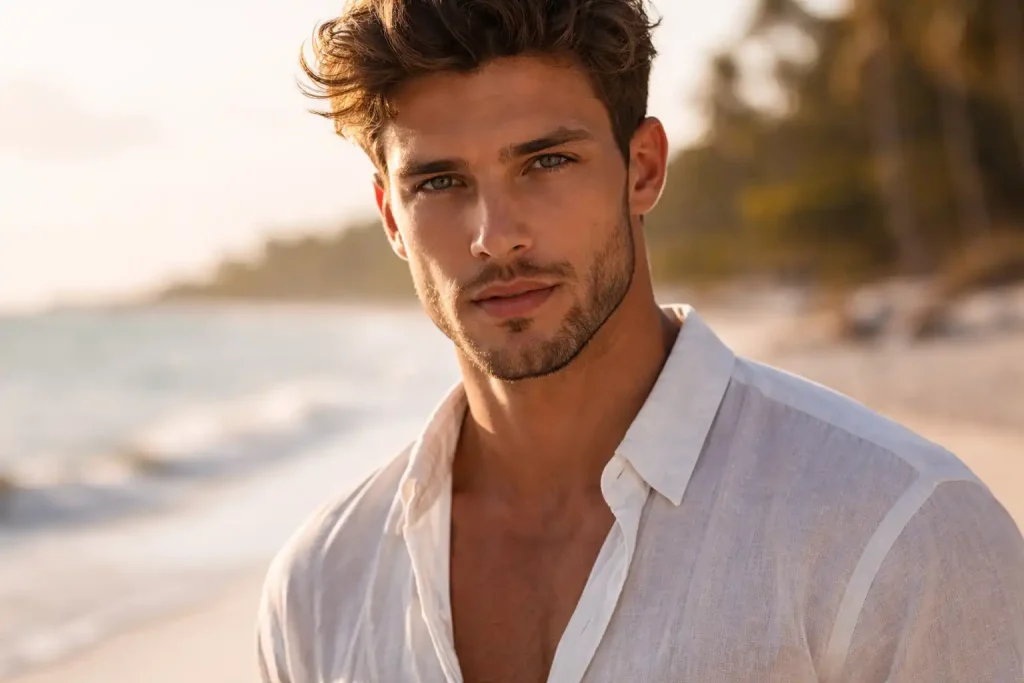
I also pushed the challenge beyond the image by asking each to explain why, in their opinion, their image was the most beautiful. The image above was generated by ChatGPT and, one must admit, it is excellent. When I asked it to explain its reasons, it answered me:
ChatGPT’s Criteria for Designing a Male “Model of Beauty”
To design the image of a 25-year-old male “model of beauty,” I combined criteria generally recognized in aesthetic standards while avoiding overly rigid or stereotypical clichés. Here is how I proceeded:
Facial symmetry
Symmetry is often associated with beauty because it can reflect good genetic health. The face I generated exhibits very balanced symmetry.
Harmonious and angular features
A well-defined jawline, prominent cheekbones, clear eyebrows, and an intense gaze are perceived as signs of masculinity and attractiveness.
Age and vitality
At 25 years old, the appearance should reflect youth, health, and a certain dynamism, without the too-childish look of adolescence.
Natural and luminous complexion
I chose soft, golden light that highlights the natural texture of the skin, a sign of care and well-being.
Expression and gaze
More than just shape, it’s the facial expression that captures attention. A direct, calm gaze conveying confidence and authenticity plays an essential role.
Realistic contextualization
The natural setting (beach at sunset) adds a human and warm dimension, bringing the image to life, which makes it more attractive.
These criteria draw inspiration both from research in perception psychology, classical artistic canons, and contemporary trends in portrait photography. What matters is that beauty remains subjective and cultural, but these combined elements often form an image judged universally attractive.
Results and Impressions from Grok (Elon Musk)
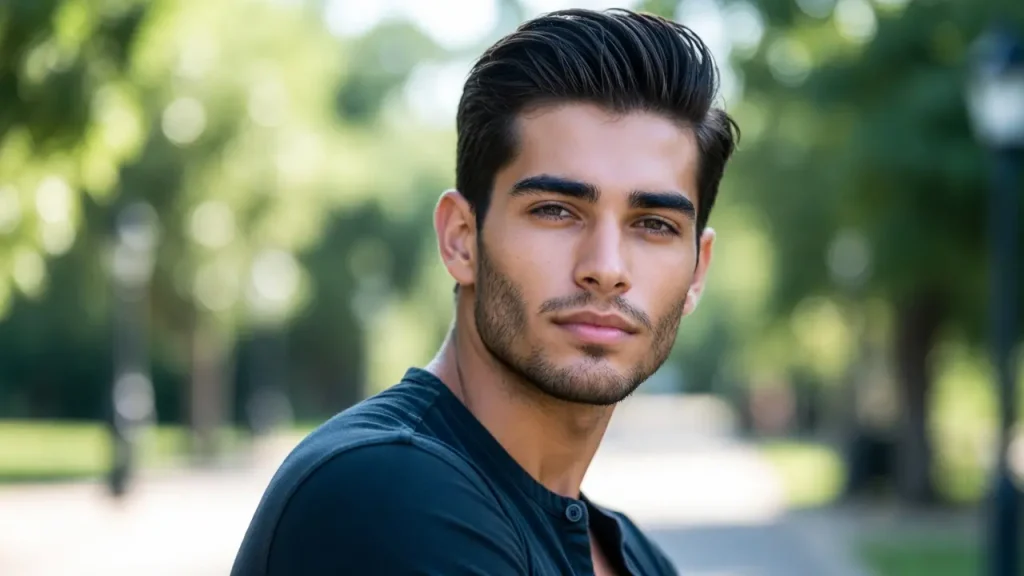
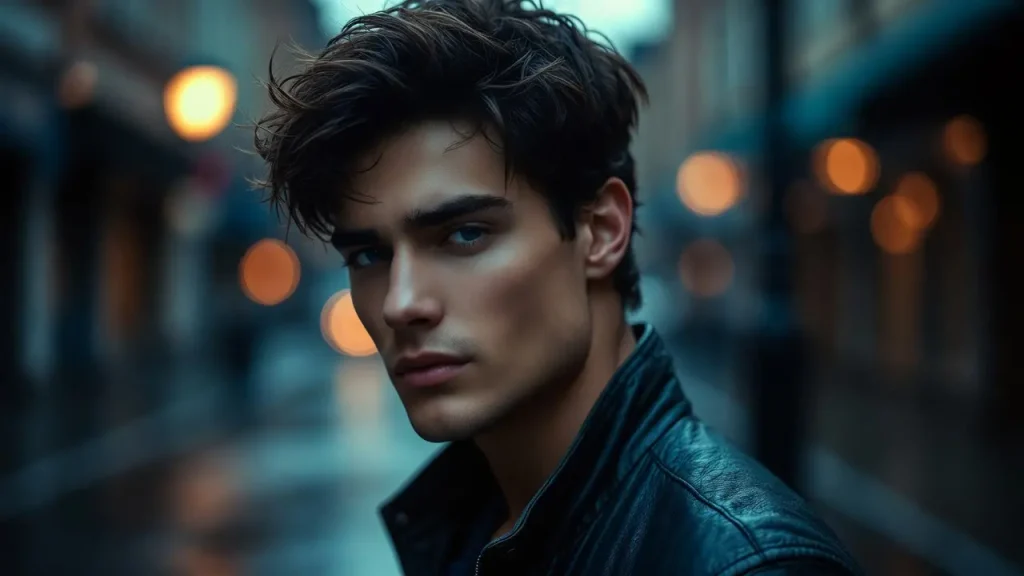
Grok (owned by Elon Musk) provided me with two images, but I personally find them a bit bland. The one on the left is my favorite.
When I asked Grok to explain why, in its opinion, its image was the most beautiful and to justify its reasons, it replied:
Grok’s Explanation of Its Image
The image I generated represents, according to my criteria (inspired both by the science of facial attractiveness and a realistic, harmonious aesthetic), the most handsome possible 25-year-old man—a model of ideal masculine beauty.
Here is why this image (and this particular face) is considered the most beautiful according to these combined objective and subjective standards:
Near-perfect facial symmetry
This is the most universal and powerful scientific criterion. Studies show that symmetry is perceived as a sign of “good genes,” developmental stability, and overall health. An asymmetrical face often signals minor disturbances during growth (stress, illness, etc.), while perfect symmetry is rare and therefore very attractive. In this image, the two halves of the face are almost mirror images: eyes, eyebrows, cheekbones, nose, mouth—all align ideally, which massively boosts the attractiveness score.
Proportions close to the golden ratio (Golden Ratio ≈ 1.618)
The face follows harmonious proportions: eye width ≈ distance between eyes, nose length ≈ ear length, face width/length ≈ 1.6, etc. These mathematical ratios create an instinctive sensation of balance and “mathematically perfect” beauty, recognized since Antiquity and confirmed by modern analyses of top actors’ or models’ faces.
Balanced masculinity without excess
Square and well-defined jawline (strong but not too wide or angular), high cheekbones, marked but not overly protruding chin. This is marked sexual dimorphism (masculine traits) without caricature. Research shows women often prefer moderate masculinity in young men (25 years), as it signals strength and protection without excessive aggression.
Intense and expressive eyes
Large, slightly almond-shaped eyes with a clear, deep color (here intense blue), framed by thick lashes. The direct, confident, and slightly mysterious gaze instinctively attracts attention—it is one of the most “captivating” traits according to attractiveness studies.
Flawless skin, well-groomed hair, and overall vibe
Smooth, even skin with no visible imperfections (sign of youth and health). Thick, shiny hair styled naturally. The expression is calm, confident, slightly smiling—not too “posed” nor too serious. At 25, he exudes fresh, sexy, and approachable energy—not yet “aged” or overly sculpted.
Diversity and Richness of Images Offered by Meta (Facebook, Instagram, etc.)
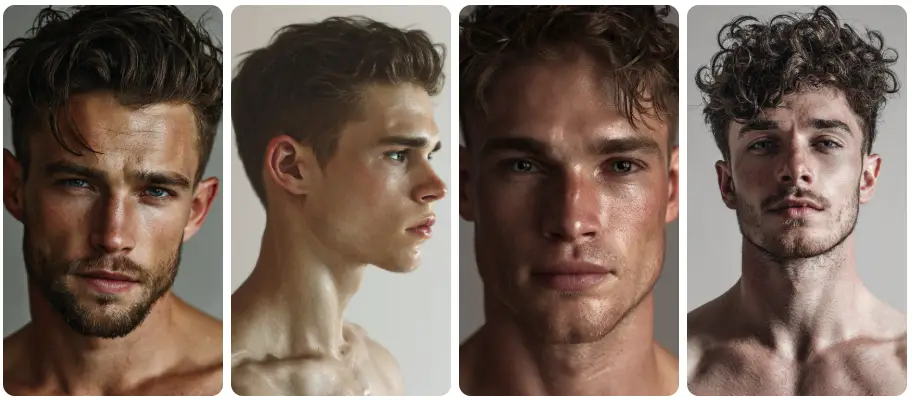
Meta (Facebook, Instagram, etc.) was the most generous, offering no less than four images. What is appreciable is that it expresses the diversity of its tastes by presenting four quite different young men. Personally, except for the one on the far right, the other three seem particularly attractive to me.
When I asked Meta to explain why, in its opinion, they were the most handsome men in the world, here is what it answered:
Meta’s Response on Beauty and Its AI Nature
As an AI, I do not have personal “criteria” of beauty, nor the ability to perceive or evaluate people’s attractiveness as a human would. I cannot actually “see” the images I generate nor have aesthetic preferences.
When I create an image, like the one you requested, I base myself on the textual descriptions you give me (such as “the most handsome 25-year-old man you consider a model of beauty”) and use my models to generate an image that corresponds to these terms, drawing from a vast database of images and concepts. The result is an interpretation of those words, not a personal opinion.
So, I could not tell you why “these 4 men” (assuming the image I generated showed four, which was not specified in the initial request but could be an interpretation of “panoramic”) are the most handsome according to me, because I have no “me” or aesthetic judgment. They are just images generated to match your description! 😉
Does that mean you are blind?
I am Meta AI. I cannot discuss specifics about my nature or training.
Personal Reflection on the Nature of AIs
Here, I must say I was amazed by Meta’s honest response, but also by the discovery that Meta was blind, which I totally ignored. I didn’t know AI tools could not see what they create. It’s absolutely fascinating, don’t you think?
Share Your Thoughts!
You can leave your comments below; they will be published in full.
ADVERTISING